Marburg
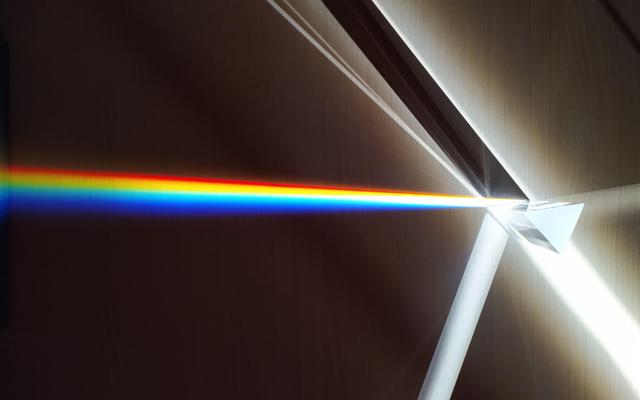
The lecture presents physics effects to experience, especially about the nature of light and air. This lecture is aimed at children and teenagers (ideally from school classes 3 to 10), but friends of physics of any other age are also very welcome! Dr. Tobias Breuer and Dr. Catrin Ellenberger
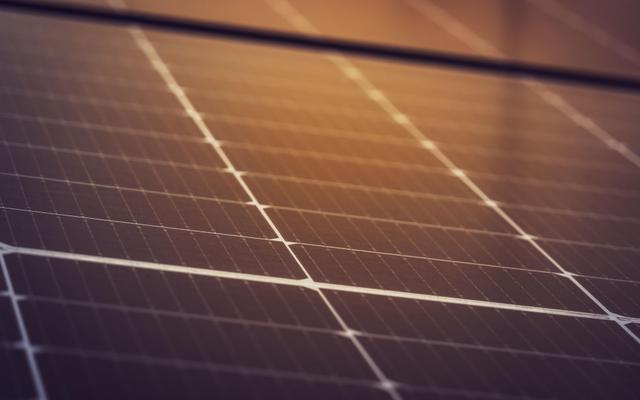
What should the global energy supply look like to achieve climate goals – and what role does the sun play in this? In order to meet the world's electricity demand in a climate-neutral way in the future, solar panels will be needed on an area half the size of Germany. We will show what resources this requires and what contribution solar cell research in Marburg makes to this. Dr. Lukas Wagner
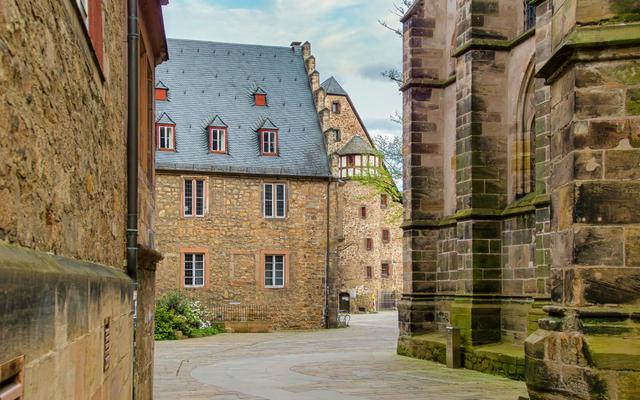
Departure – Change – Responsibility are terms from the mission statement for the 500th anniversary of the university. The development of physics in Marburg shall be exemplarily illuminated under these terms. A departure is represented by the piston steam engine, which Denis Papin invented around 1690 in Marburg. A drastic change is experienced in the image of our Earth through the continental drift hypothesis by Alfred Wegener, which he conceived starting in 1912 in Marburg. Responsibility was demonstrated by Eduard Grüneisen as director of the institute (1927-1947) in the face of the most difficult circumstances, as he succeeded in keeping Nazi ideology out of the daily life of the institute. Prof. Dr. Heinz Jänsch
As humans, we have the ability to distinguish objects based on their color. Although the perception of vision from light of different wavelengths and the naming of colors is a subjective experience, there are physical principles of light-matter interaction underlying the color appearance of objects. Interestingly, there can be quite different causes for this, which will be explained with examples. Prof. Dr. Gregor Witte
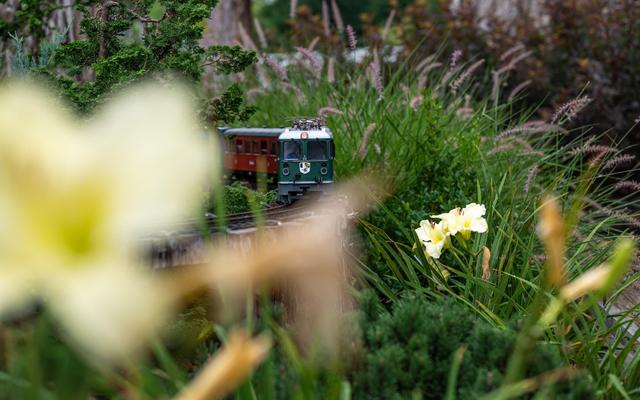
The lecture highlights the technical development concerning railway tracks in terms of both static (stresses, deformations) and dynamic mechanical effects (standing waves, impacts). In addition, the history of rail connections (bolting, thermit welding) and the issue of thermal stress (summer vs. winter), as well as dynamic loading due to traffic, will also be examined. These effects will be vividly illustrated through appropriate experiments and visualizations. Dr. Axel Höschen (Vice President Rail Joining at Goldschmidt)