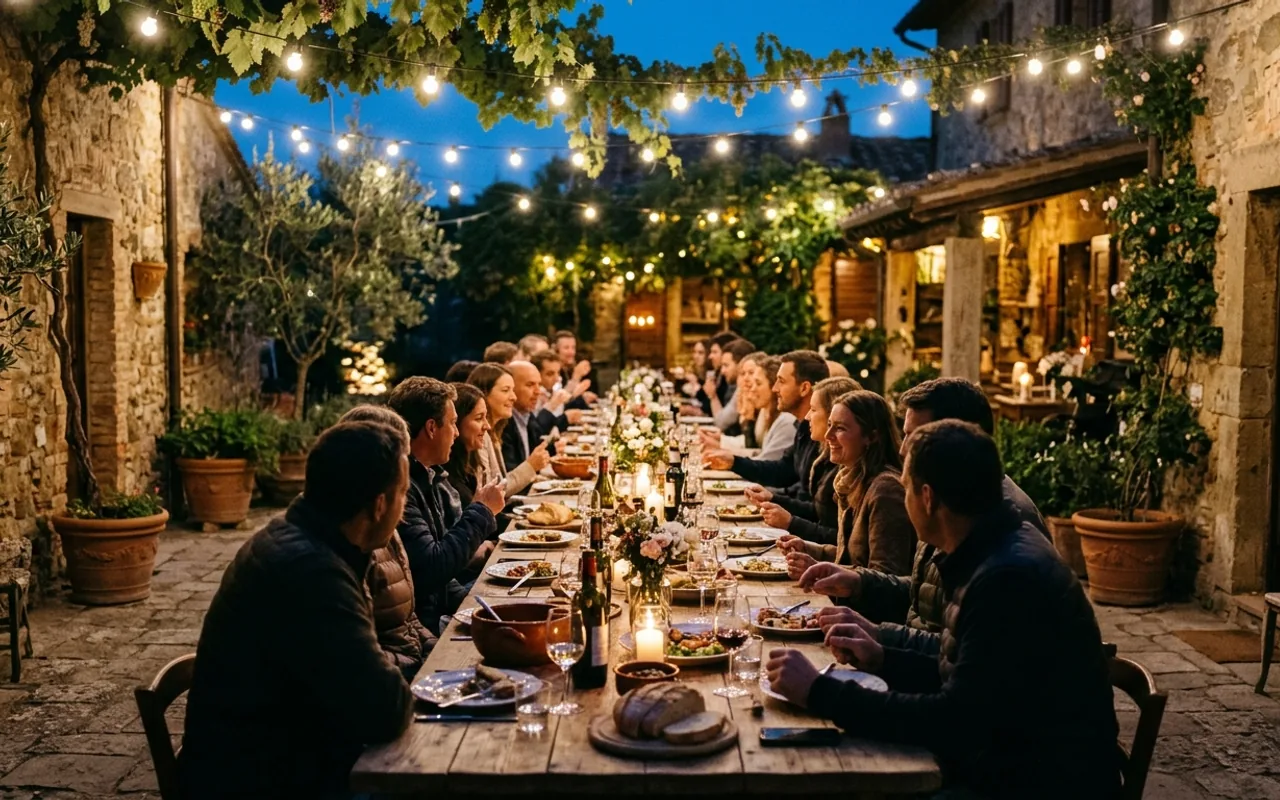
Discover concerts, nightlife, dining, culture and events in Altmannstein.
It is known that in 1664, due to severe damage to the original church, the roof and roof truss were renewed. From 1699 to 1705, the veneration of an old wooden Pietà is documented. The dilapidated church was rebuilt from 1760 to 1764 under master mason M. Prädl. For reasons of space, a tower was erected above the choir, but it collapsed shortly before completion in 1761 and severely damaged the nave. The tower was then moved to its present location, but could only be completed after the church was consecrated in 1763. In 1858, the church was extended westward by 15 feet. During a comprehensive restoration in 1890, three new altars were installed. In 1908, stained-glass windows were added, and in 1909 the damaged building was repaired. The remodeling of the church in 1959 (under architect Fr. Haindl, Munich) brought a generous extension of the nave and a major renewal of the interior furnishings.
The Lords of Hexenagger, who are documented from 982 to 1480, were the builders of the castle. Through the marriage of the widow of Johann von Hexenagger to Count Jörg von Helfenstein, this family came into possession of Hexenagger. In 1528, they sold Hexenagger to Duke Wilhelm of Bavaria, who enfeoffed the bailiff at Dietfurt and Altmannstein, Erhardt von Muggenthal. After the castle was destroyed in the Thirty Years' War, the Muggenthals rebuilt the chapel and tower in 1625/29. When the Hexenagger line of the Muggenthals died out in 1724, the heirs sold Hexenagger to the Bavarian Elector Karl Albrecht, who gave the castle in 1731 to his mistress Maria Josepha, Countess of Morawitzky. In 1738, the estate passed to her husband, Prince Portia, and after his death in 1754 to Anton von Kayserstein, who had a new wing added to the castle. From 1830 to 1951, the Nobles of Weidenbach were lords of Hexenagger Castle; today the castle belongs to the Leichtfuß family.
They offered, in addition to the confessionals in the church, an extra opportunity to receive the sacrament of penance when numerous worshippers — especially on the feast days of the Scapular Brotherhood — visited the church. The interior of the church is impressive for its uniformly Baroque furnishings: the choir, stuccoed around 1700, provides a splendid frame for the high altar, which dates from the same period; in the niche of the high altar is a figure of the Virgin Mary with the Child Jesus, surrounded by angels, with John the Baptist (left) and St. Emmeram (right) below. In the choir on the right, a large epitaph commemorates Johann Wolfgang von Muggenthal (died 1666) and his wife Polyxena, née von Schurf (died 1658); the epitaph consists of two reliefs in Solnhofen stone framed by red marble pilasters, the upper showing the Resurrection of Christ and the lower showing the deceased with ten children. The ceiling and walls of the nave as well as the balustrades of the double gallery are decorated with strapwork stucco; on the walls, these stuccoes form the frame for large oil paintings from around 1730 depicting scenes from the Passion. The two side altars also date from the Baroque period (around 1720); however, according to the signature, the altarpiece of the left side altar showing the beheading of St. Barbara was painted only in 1764 by C. Fröhlich of Neustadt. From predecessor buildings of the present Baroque church, a Romanesque baptismal font (by the left side altar) and a beautiful late Gothic Madonna from around 1470 (on the left nave wall) have survived.
The 8,000-square-meter castle grounds were protected on the side facing the hinterland by a visible ditch, and on the other sides by the steeply sloping rock. The well-preserved round keep, with two-meter-thick walls of rusticated ashlar, dates from the early 13th century. Only remains survive of the former residential building. Slightly below the actual castle lies the late medieval so-called Hunger Tower, which, together with the partially preserved wing walls, connected the castle with the market fortifications. The artistic design refers to closely interwoven themes. The exhibits are intended to embody the symbiosis between past and present in contemporary visual language. Along the paths leading downhill, oil paintings are displayed, all depicting “heraldic body maskings.” These shield motifs signal symbolic motifs presented as if by messengers (heralds). The trident at the end, embedded in a mandala-like shield motif, represents the past, present, and future. After ten images, the serpentine path ends at the Hunger Tower. The Heraldic Path opens once more toward the east with iron figures. With their attributes, they depict apparent confrontations. The linear, skeletal execution of the iron figure objects gives them transparency and a fragmentary character. The “Tournament Chariot with Male Torso” and the “Amazons with Shields and Maskings” stand for intellectual, playful conflicts.
Discover 4 curated Community & Social events and highlights in Altmannstein on Viventii with times, venues, and tickets. Current highlights include Holy Cross Church Altmannstein, Hexenagger Castle, Catholic Church of Our Lady, Sollern.
Viventii currently lists 4 public events, concerts, parties, cultural happenings, and local spots in Altmannstein, including Holy Cross Church Altmannstein, Hexenagger Castle, Catholic Church of Our Lady, Sollern.
Use Viventii's curated Today, Tonight, Weekend, This Week, Leisure, and Places guides for Altmannstein.
Yes, browse free admission events at /en/cities/Altmannstein/free and 0% fee tickets at /en/cities/Altmannstein/tickets.