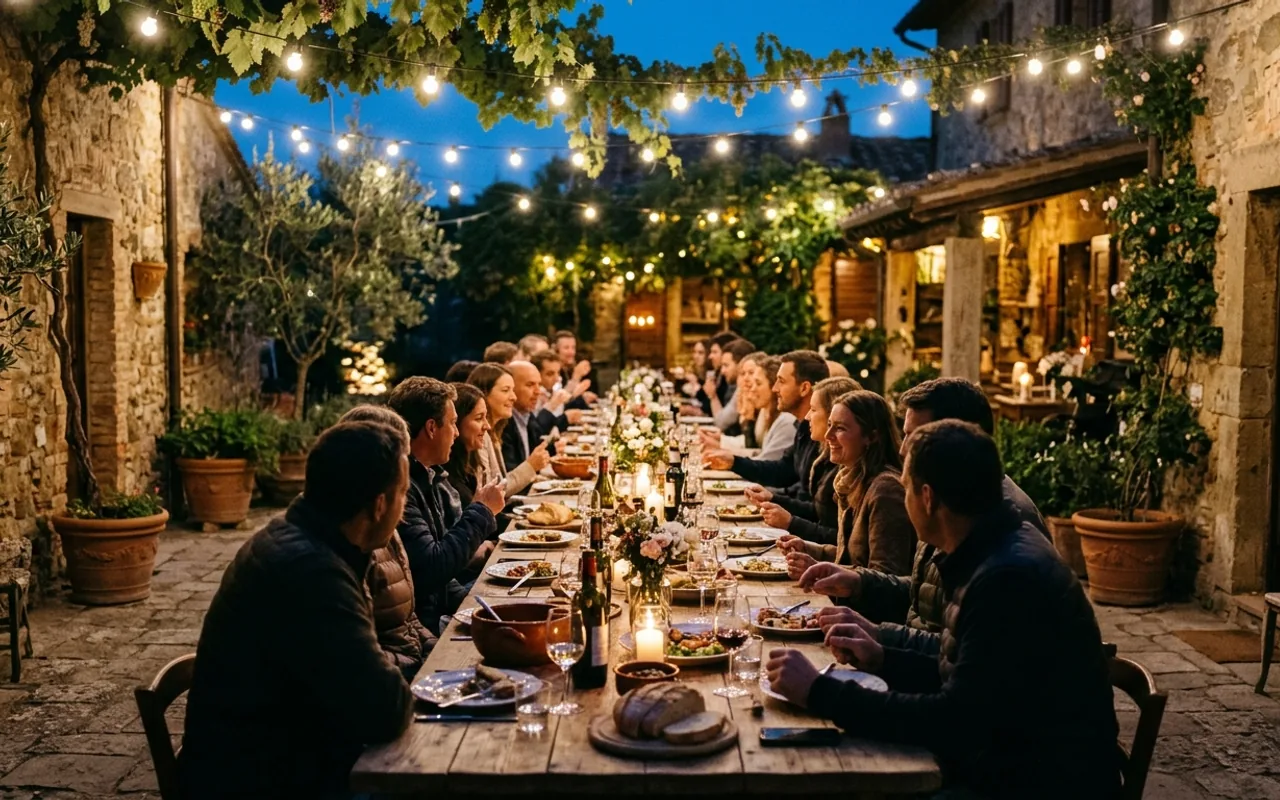
Discover concerts, nightlife, dining, culture and events in Bad Feilnbach.
For centuries, the region, and thus Bad Feilnbach as well, belonged ecclesiastically to the parish of Au bei Aibling. Politically, Feilnbach gained independence as early as 1849. With the construction of the Church of the Sacred Heart under Expositus Alfons Amrain (1922-1959), the Expositur Lippertskirchen-Wiechs, which had existed since 1922, was released from the parish association of Au in 1959, elevated to a curacy, and on 1/1/1963 raised to an independent parish. The Church of the Sacred Heart, with its full onion dome on the tower reminiscent of the Baroque style of many churches in the area, is a building by the Munich architect Joseph Rampl from 1956/57. Anyone entering the interior will be surprised by its generous spaciousness. A natural stone mosaic with stones from all over the world, designed by the Munich artist Willibald Bierl and executed in 1971, together with the remarkable image composition of the Majestas Domini on the rear wall of the choir, shapes the impression of the space. The valuable, large-format stained-glass windows of the church also come from the same artist. Of particular note is the depiction of the Stations of the Cross by the painter Leo von Welden (1899-1967), who lived in Feilnbach for a long time.
The branch church of St. John the Baptist of the parish church of St. Michael (Litzldorf) is a small, charming late Baroque church, built in 1732 by Abraham Millauer, with a steep roof and an octagonal western roof turret. Inside, a noteworthy, lively late Baroque interior with folk-style carved figures bears witness to the refined taste of its time: John the Baptist half-seated on clouds, surrounded by angel heads, holding the baptismal shell in one hand and the cross staff in the other, at his feet the Paschal Lamb, with the ribbon bearing the words of John entwined around the cross: Ecce Agnus Dei / Behold, the Lamb of God!; to the sides, Saints Peter and Paul; in the upper section, the Christ Child on clouds with putti and angel heads in the glory; the weather saints John and Paul above the side passages were taken over from the altar of the previous building.
With the curtailment of the proprietary church system in the 9th/10th century, it was transferred to the cathedral church in Freising and attached to the Freising episcopal court in Elbach. In 1315, Lippertskirchen appears as a branch of Elbach, and from 1448 as a branch of Au. On January 28, 1349, a Freising auxiliary bishop reconsecrated a chapel dedicated to St. Leonard with a cemetery in Lippertskirchen. This chapel probably remained as a side aisle when the church was rebuilt at the beginning of the 15th century. Remains of the Gothic house of God can be recognized as a saddleback tower and in the small outer window arches. The remodeling carried out from 1778 onward in the Baroque style according to the plans of the Munich court master builder Franz Anton Kirchgrabner is rooted in the veneration of Mary documented in Lippertskirchen since the 14th century, which is attested as a pilgrimage to "Maria Morgenstern." The Rococo furnishings made between 1783 and 1785 by the sculptor Joseph Götsch, centered on the late Gothic Queen of Heaven "Maria Morgenstern," and the attractive ceiling frescoes created in 1798 by the Munich painter Joseph Hauber are an example of the adaptation of courtly style in a rural setting. They, like the stucco decorations made by Franz Doll from Wessobrunn, which in their motifs still remain tied to Rococo, also point to the emerging Classicism. Every year on November 6, the Leonhardi Ride takes place in Lippertskirchen. In the threefold circuit, the faithful implore the protection and blessing of St. Leonard, patron saint of livestock, for
The name of the village of "Wiechs" (Lat. vicus = village) bears witness to the place’s long past, which reaches back to the time of the Roman Empire. In 765, the nobleman Poapo donated his property in Wiechs (Uuihse) to the Church of Freising. This suggests the existence of a proprietary church even at that time. The church owes its present appearance as a successful work of cheerful Rococo to the last of the Hausstätt master builders, Hans Thaller, who had the church remodeled in the style of the period (1754–58). The elegantly shaped, broken onion dome, the subtly articulated exterior, and the entrance portal fashioned with a light hand invite you to step inside. Inside, the church is an extremely impressive, highly artistic structure. The nave consists of three paired bays separated by transverse arches, while the chancel consists of a larger domed space. The interior is elaborately stuccoed in the Rococo style. The side altars, the pulpit, the high altar retable, and the gallery parapet are also made of stucco. What is special about St. Laurentius is the fine, delicately applied stucco, which has largely been preserved in its original color tone. This rare, beautiful, rich, and masterful stucco decoration of the ceiling makes the church well worth seeing. The master of this Rococo attire, Johann Martin Bichler, is chiefly responsible for the two precious side altars, which are exceptional in their construction and design. The carving is by Joseph Götsch. The altarpiece by Sebastian Troger (1761) depicts the church patrons, Pope Sixtus II and his deacon Laurentius, fo
The church, surrounded by a wall, was built in 1708 in the Baroque style by the 25-year-old master builder Abraham Millauer from Hausstatt. As a branch church, together with the subsidiary church of Kleinholzhausen and the branch churches of Lippertskirchen and Wiechs, it belonged to the mother church of Au b. Aibling. Pastoral care was provided by a beneficed priest from Au, alternating with the branch church of Maria Morgenstern. After long efforts to gain independence, the people of Litzldorf were finally able to celebrate the elevation to the parish of St. Michael in 1892. Corbinian Willerer from Dettendorf was appointed the first parish priest on July 1, 1892. The high altar with a Rococo tabernacle contains an altar retable depicting God the Father as well as the painting of the Archangel Michael. The left side altar contains paintings of Saints Donatus and Martin, and the right side altar depicts the abundance of grace from the Eucharist as well as Saint George. The church interior, decorated with simple stucco in geometric forms, contains a ceiling painting with scenes from the life of Jesus, created around 1870 by the Munich painter Max Fürst. On the south side of the church building is the tower, topped with a well-proportioned onion dome. But the history goes back to the year 771. Several mementos from the old church have also been preserved: - small death bell from the year 1656 - two Gothic candle holders - votive plaques from the year 1692 with images of the Mother of God and Saint Michael - Gothic grille in the vestibule Every year, the "Holy Sepulchre"
Discover 6 curated Community & Social events and highlights in Bad Feilnbach on Viventii with times, venues, and tickets. Current highlights include Parish Church of the Sacred Heart, Bad Feilnbach, Branch Church of St. John the Baptist in Kleinholzhausen, Pilgrimage Church of Maria Morgenstern in Lippertskirchen.
Viventii currently lists 6 public events, concerts, parties, cultural happenings, and local spots in Bad Feilnbach, including Parish Church of the Sacred Heart, Bad Feilnbach, Branch Church of St. John the Baptist in Kleinholzhausen, Pilgrimage Church of Maria Morgenstern in Lippertskirchen.
Use Viventii's curated Today, Tonight, Weekend, This Week, Leisure, and Places guides for Bad Feilnbach.
Yes, browse free admission events at /en/cities/Bad Feilnbach/free and 0% fee tickets at /en/cities/Bad Feilnbach/tickets.