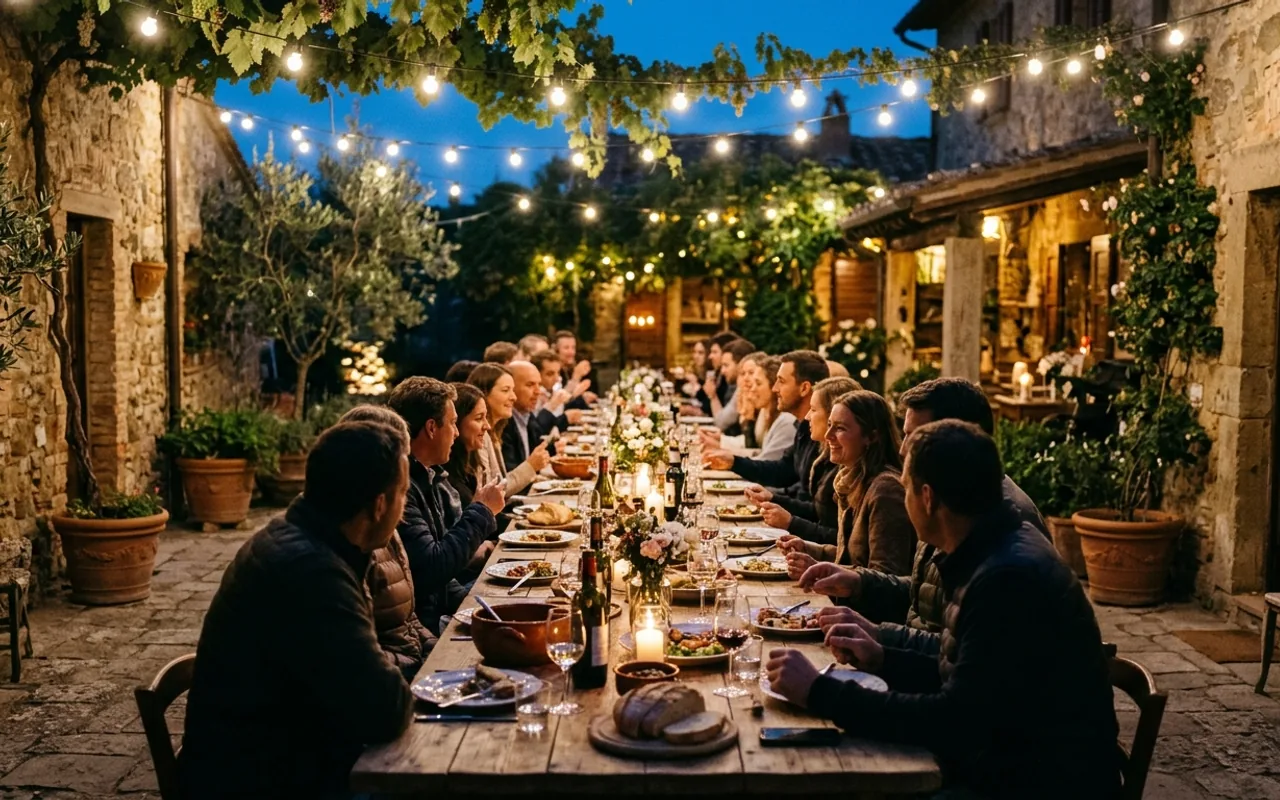
Discover concerts, nightlife, dining, culture and events in Brannenburg.
In 1659, the hermit Georg Tanner settled here and placed an image of Our Lady of Perpetual Help in his hermitage, to which a pilgrimage soon developed. A wooden chapel was therefore built in 1687, and a small stone church was constructed in 1716. In 1750, Count Max IV von Preysing had the foundation stone laid for the new late Baroque church, which was consecrated in 1767. The space is dominated by the Rococo altar in white and gold by Joseph Götsch (1767), with the image of Our Lady of Perpetual Help, a copy of the famous Cranach image from Innsbruck. Beneath a sweeping canopy in the altarpiece, surrounded by angels, clouds, and rays, the miraculous image forms the center of the church. This is reinforced by the pointing gesture of St. John of Nepomuk and the attendant figures Saints Florian and Francis of Paola. Sebastian Rechenauer the Elder, born in 1761 in Schweinsteig, thus in the immediate vicinity of the church at Schwarzlack, created the frescoes in the choir and nave and the grisaille paintings of the four plagues of mankind. The many votive plaques in the church bear witness to the people’s hardship, despair, comfort, gratitude, and trust in God. The church can be viewed in part; the vestibule is separated off by a grille. ### Events The service takes place during the summer months (after Easter until mid-October) every Friday at 7:00 p.m. [To the events at Schwarzlack >>](https://veranstaltungen.chiemsee-alpenland.de/region/religion/?suche&volltext=Schwarzlack) ### Mountain inn Next door is the [Schwarzlack Mountain Inn](https://www.chiemsee-alpenland.de
On the Biber in Brannenburg stands the early Baroque former pilgrimage church of St. Maria Magdalena with its associated Way of the Cross. ### The former pilgrimage church The church, which is oriented to the southwest rather than, as usual, to the east, was built during the Thirty Years' War by a local hermit and has remained largely unchanged to this day. The Magdalene Church grew out of a hermitage with a chapel and stands in the middle of a forest meadow. The now Neo-Gothic church is distinguished by altar figures about one meter tall. The crucifix probably belongs to the original furnishings from 1630. A little below the church, naturally formed rock caves can be found. In the past, these served the hermits as additional places of devotion. Settlement of the Biber heights is documented as far back as the early 19th century. The last hermit died in 1813. ### The Way of the Cross The Way of the Cross, built in 1733/1734, has largely survived in its original condition with its 15 stations. Thus, the Biber is one of the earliest Way of the Cross sites in Bavaria. It is laid out in a horseshoe shape, with the individual stations represented in the form of chapels. Unusual is the inclusion of Christ's Resurrection in the Way of the Cross.
The Brannenburg Kneipp facility is located in a spacious fenced area in the district of Thann at the end of Kellerweg. The facility is set in a very beautiful and quiet landscape, offering a high level of recreation. The Brannenburg Nature Adventure Trail, which is especially interesting for families with children, also leads into the grounds, and there is therefore an insect hotel and a barefoot path here. There is also an outdoor chess set. The Kneipp facility is open from around Whitsun until the end of September. Use is free of charge. Dogs are not allowed in the facility. In summer, regular Kneipp meetups take place, where interesting facts about Kneipp’s teachings and the correct way to do Kneipp therapy are explained. Dates in the [events calendar](https://veranstaltungen.chiemsee-alpenland.de/region/?suche&volltext=kneipp).
The tourist information office with guest services is located at Rathausplatz in a separate building. The team will be happy to advise you on any questions about your stay in the region.
The Church of the Assumption of Mary preserves valuable old epitaphs dating from 1332. The Gothic pointed spire is around 40 m high and, apart from the porch and the Baroque windows, the late Gothic exterior has largely been preserved to this day. St. Florian and St. Sebastian stand on the two side altars. The interior is dominated by Rococo, which was created between 1772 and 1789. From 1454/55 to 1956, the church belonged to the parish of Großholzhausen, until the parish of Brannenburg became independent again.
The system is open to everyone, costs nothing, works all year round, and works when the descent from the summit takes longer than planned. Whether you want a lift yourself or have room in your car – join in!
On all bus and train routes within MVV zones 5 to 12, holders of guest cards from Brannenburg travel free of charge. The guest card serves as a valid ticket. ### Example excursions: - To [Rosenheim](https://www.chiemsee-alpenland.de/entdecken/region/alle-orte/rosenheim-2498529586) - To [Bad Feilnbach](https://www.chiemsee-alpenland.de/entdecken/region/alle-orte/bad-feilnbach-3d471b3193) - To [Nussdorf a.Inn](https://www.chiemsee-alpenland.de/entdecken/region/alle-orte/nussdorf-a.inn-31cf4c1c8c) - To [Flintsbach a.Inn](https://www.chiemsee-alpenland.de/entdecken/region/alle-orte/flintsbach-a.inn-c967c26cb0) - [Wendelstein Ring Line](https://www.chiemsee-alpenland.de/entdecken/alle-sehenswuerdigkeiten/wendelstein-ringlinie-a228d22cb4) - To [Bad Endorf](https://www.chiemsee-alpenland.de/entdecken/region/alle-orte/bad-endorf-e7456cd373) - To [Prien a.Chiemsee](https://www.chiemsee-alpenland.de/entdecken/region/alle-orte/prien-a.chiemsee-d485eed0d5)
The Margarethenkirchlein, located somewhat above Brannenburg in magnificent scenery with a unique panoramic view over the Inn Valley, is a gem of Christian art and devotion. Veneration of Saint Margaret entered Western culture at an early stage. Returning crusaders brought the cult of Margaret back to their homeland in the 11th/12th century. The construction of the front nave suggests that the present-day Margarethenkirche was built exactly at that time, initially as a chapel. It was first mentioned in documents as a church in 1445. Around 1500, the chancel and tower were added. In 1654, the church was extended to the west and received a wooden paneled ceiling as well as a gallery parapet. The neo-Gothic stepped gable of the church tower dates from 1877.
At Top on Mountain Bike & Ski Store in Brannenburg, you will receive comprehensive advice and service for bicycles and skis. Services - Advice, sales and rental of bicycles (e.g. MTB, gravel bikes, road bikes, touring bikes, etc.) - Advice and sales of skis (e.g. alpine skis, touring skis, snowboards, avalanche equipment, and much more) - Bicycle, ski and board service - Riding technique courses More information on the [website](https://toponmountain.com/bike-und-ski-store-brannenburg.html).
Discover 10 curated Community & Social events and highlights in Brannenburg on Viventii with times, venues, and tickets. Current highlights include Pilgrimage Church of Our Lady of Perpetual Help and St. John of Nepomuk at Schwarzlack, St. Maria Magdalena Church on the Biber, Brannenburg Kneipp Facility.
Viventii currently lists 10 public events, concerts, parties, cultural happenings, and local spots in Brannenburg, including Pilgrimage Church of Our Lady of Perpetual Help and St. John of Nepomuk at Schwarzlack, St. Maria Magdalena Church on the Biber, Brannenburg Kneipp Facility.
Use Viventii's curated Today, Tonight, Weekend, This Week, Leisure, and Places guides for Brannenburg.
Yes, browse free admission events at /en/cities/Brannenburg/free and 0% fee tickets at /en/cities/Brannenburg/tickets.