Discover concerts, nightlife, dining, culture and events in Bruckmühl.
There is always perfect football weather in the hall! The facility is centrally located between Rosenheim and Munich and can be reached in just a few minutes from the Bad Aibling motorway exit. ### The highlights of SOCCARENA The 2,500-square-meter hall offers three large artificial turf courts measuring up to 30 x 15 meters, surrounded by boards and nets. This keeps the ball in play at all times and the action really gets going. The fun sport of Bubble Soccer is especially popular for children's birthday parties or bachelor parties. ### Children's birthday parties at SOCCARENA All party packages include at least 90 minutes of indoor soccer or Bubble Soccer. During halftime, there is usually cake (either arranged by us or brought along by you) and drinks. And at the end, when all the children are exhausted, there is delicious original Italian pizza until everyone is full. Further information can be found on the homepage at [www.soccarena.de](http://www.soccarena.de)
At the beginning of the 17th century, two impressive lime trees could already be seen from afar, pointing to the "Weichlindengarten," which, according to popular belief, was the burial place of three wealthy and respected men. The planting of a lime-tree avenue in front of the portal of the monastery church is already visible in the earliest depictions of this pilgrimage church, which means that the place still lives up to its name today. In the difficult years of the Swedish Wars and the plague years of 1632/34, the parish of Högling vowed to build a chapel at the Weichlinden. During the construction work, the workers came across a gold ring. Shortly afterward, a plentiful spring gushed forth from the ground. The Munich Capuchin Father Chrysostomus then advised the people of Högling to build the chapel round, in the shape of the ring. The fame of this new place of grace spread quickly throughout the Bavarian Alpine foothills, and in the same year pilgrims streamed in from all directions to the "little spring" to pray here and to seek help and health through the spring water. Above the Chapel of Mary, the construction of a three-aisled basilica was commissioned by Provost Valentin Steyrer (Augustinian Canons' Monastery of Weyarn) from 1651 onward and consecrated in 1657. The interior of the church is in Baroque style, and on the high altar three identical, larger-than-life figures of the Holy Trinity can be seen. From an art-historical perspective, the church is unique. At first glance it appears to have five aisles, but in fact it has only three naves. The two outer ai
Berr Reisen in Bruckmühl bietet komfortable Busreisen, Tagesfahrten, Urlaubsreisen und individuelle Gruppenreisen – zuverlässig seit vielen Jahren.
The 58 km-long Mangfall runs from west to east through the region. The first place on the Mangfall in Chiemsee-Alpenland is [Feldkirchen-Westerham](https://www.chiemsee-alpenland.de/entdecken/region/alle-orte/feldkirchen-westerham-9e2905c3aa), then [Bruckmühl](https://www.chiemsee-alpenland.de/entdecken/region/alle-orte/bruckmuehl-063dfb6c9c). It then passes the towns of [Kolbermoor ](https://www.chiemsee-alpenland.de/entdecken/region/alle-orte/kolbermoor-144298a185)and [Bad Aibling](https://www.chiemsee-alpenland.de/entdecken/region/alle-orte/bad-aibling-e9b9137f13) and flows into the Inn in [Rosenheim ](https://www.chiemsee-alpenland.de/entdecken/region/alle-orte/rosenheim-01f56f3614)at the [Manpfallpark with Innspitz ](https://www.chiemsee-alpenland.de/entdecken/alle-sehenswuerdigkeiten/mangfallpark-mit-innspitz-4a575375b1). Unlike other rivers, it does not rise from a spring, but is an outflow of Lake Tegernsee in the district of Miesbach. The [Mangfall Cycle Route ](https://www.chiemsee-alpenland.de/entdecken/tourenportal/mangfall-radweg-57436976fb) follows the riverbank from Lake Tegernsee to Rosenheim. The eastern part of the Bavarian Prealps is also referred to as the "Mangfall Mountains," since the Mangfall flows there and drains large parts of the area; it is also a drinking water source for a large part of Munich. #### History As early as the Middle Ages, the Mangfall was developed for industrial use and hydropower. In Rosenheim, a salt works was built in 1810 to boil the brine from Bad Reichenhall. Numerous diversions were built between Lake Tegernsee an
At the very beginning of the Salus Auwald Biotope between the Mangfall and the factory canal stands the Natural History Museum. It rests, protected from flooding, on sturdy oak trunks and blends well into the floodplain landscape with its timber construction. It is a foundation by Otto Greither, owner of the Salus company, for the market town of Bruckmühl, and on 100 square meters of exhibition space it houses the collection of preserved animal species by Adolf Peschke (photographer and ornithologist). In 1997 he donated around 500 exhibits to the market town of Bruckmühl, covering almost all animals native to Bavaria. A visit to the Natural History Museum sets the mood for the adjacent floodplain forest and gives a vivid picture of the bird and animal life of a floodplain forest. Display cases, picture and text panels, as well as videos, complete the information. The Natural History Museum was only established in 2006 and shows the collection of the graduate biologist Horst Gleiss, who gathered precious treasures from all over the world. A butterfly collection and a beetle collection, both a donation from Mr. Renner, are also housed here. In a special corner, a diorama is dedicated to the forest and its animals. The Salus Auwald Biotope was acquired in 1995 by Otto Greither with the aim of preserving one of the last natural floodplain forests in the Bruckmühl area for posterity, creating a paradise for native birds, and securing a green oasis for the local population. The site covers 27,000 square meters, is over 800 meters long, and between 30 and 50 meters wide. Excep
The teaching apiary houses several bee colonies and serves the beekeepers' association as a central venue for exchanging experience, training sessions, beekeeping courses, and public outreach. The 33 m² bee house is located directly on the Mangfall.
In 1632/34, the parish of Högling vowed to build a church on a site overgrown with "soft lime trees" in the time of need during the Swedish wars and plague years and erected it just 10 years later. Since that time, pilgrims have been making a pilgrimage to this shrine to the Holy Trinity and the Mother of God, and a small museum has been set up on the three upper floors above the sacristy. It displays parts of the church treasury (liturgical implements and vestments), votive pictures as well as figures and paintings from the pilgrimage church, mainly from the 17th and 18th centuries.
The playground is located directly south at the landward toe of the Mangfall embankment; combination play equipment as a pirate ship, double swing, 2 spring rockers, 2 benches. Suitable for children aged 6-12. Playground equipment: - Slide - Sand play area - Playhouse - Swing - Climbing equipment - Climbing wall - Seesaw / spring rider - Net climbs - Ramp climbs - Climbing net Features: - Quiet location - Normally used
The house is located in the charming foothills landscape, and from most rooms the view extends to the mountain scenery of the Wendelstein. Here, in a family-like atmosphere, care is taken to preserve and restore health in old age. The principle laid down in the Social Code applies: rehabilitation before care! The more independence a person retains in old age, the greater their joy in life and agility. Here, the focus is on the individual, and the clinic team strives to respond as individually as possible to each of the maximum 30 patients. The specialist clinic has specialized in regaining the ability to walk and thus mobility in everyday life (physiotherapy), relearning how to speak (speech therapy), and the ability to live independently (occupational therapy). The staff hopes for each and every one of our patients to reactivate both bodily and mental functions as early as possible after hospital stays, operations, or acute illnesses, and gives their best every day to achieve this.
Bicycle workshop for maintenance and repair work. A tube vending machine with replacement tubes in various sizes is also available.
The octagonal fountain chapel is located on the north side of the pilgrimage church, as a separate annex with a steep tent roof. According to popular belief, the healing spring is said to help against eye ailments, epilepsy, diseases of the organs, foot ailments, and other complaints. During the plague and the Thirty Years' War, the parish council of Högling approved the construction of a chapel by two state-owned linden trees, also called Weichlinden, which, according to popular belief, was the burial place of three wealthy and respected men. During the construction work, the workers found a gold ring. Shortly afterward, a prolific spring gushed from the ground. On the advice of the Munich Capuchin Father Chrysostomus, the people of Högling built a round chapel around the spring in the shape of the ring. The reputation of this new place of grace spread quickly throughout the Bavarian Alpine foothills, and soon pilgrims from many places flocked to the "little spring" to pray here and obtain help and health through the healing spring water. Even today, in the summer months, pilgrims and those seeking help come from near and far to drink the healing water and pray. Weihenlinden is one of the most visited pilgrimage sites. In Bavaria in particular, Marian springs, also called "Frauenbrünnerl," are highly valued.
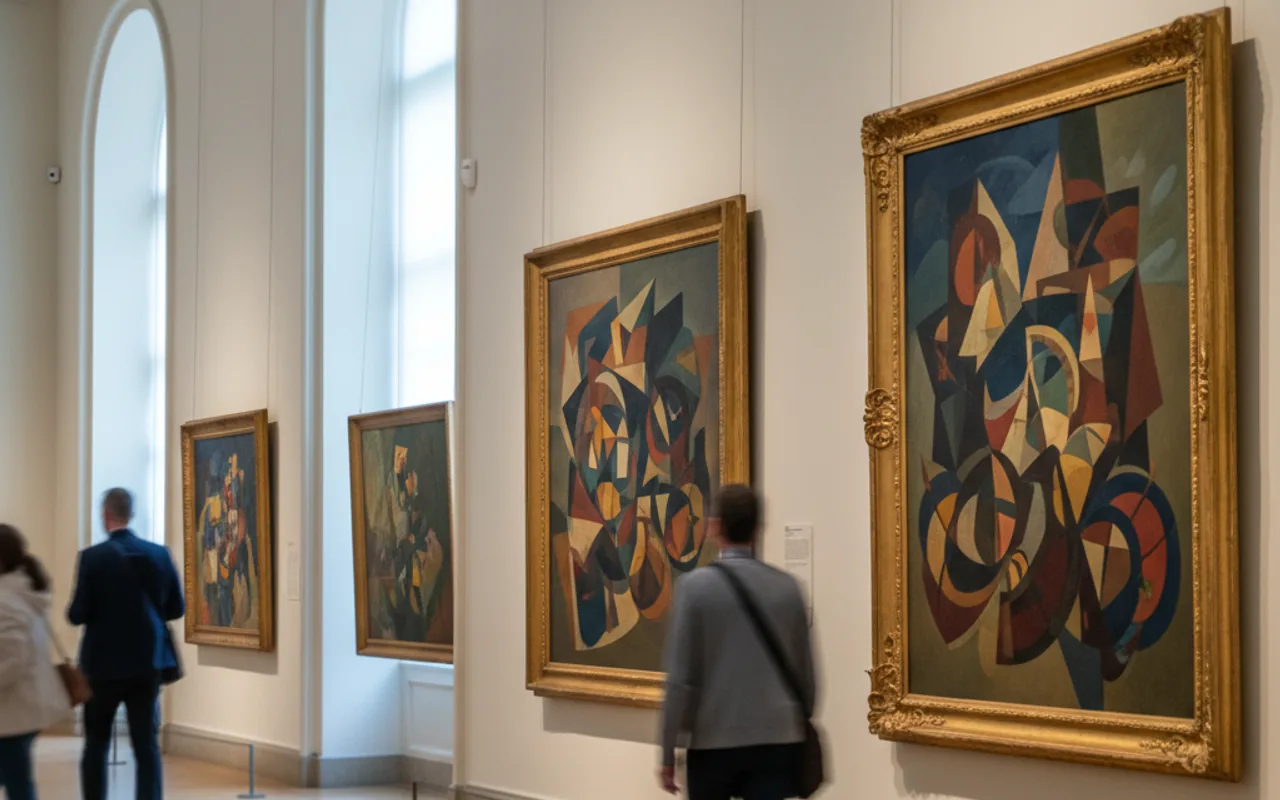
The gallery’s success story spanning more than 25 years began with the initiative of the artist and restorer Rupert Dorrer in 1993. At that time, he donated his father’s art collection to the market municipality of Bruckmühl as an inalienable foundation. At the same time, he sold his grandparents’ house, a bourgeois house built in 1895 by Italian master builders in the very center of Bruckmühl, to the market municipality of Bruckmühl so that a gallery could be established there. Since 1994, the house with its special flair has been popular with artists and the public alike and gives the exhibitions a very special atmosphere. The art collection of the Dorrer Foundation provides a good overview of the development of art in the region over the past 150 years. Portraits, still lifes, landscapes, abstract painting, and sculptures made of various materials give visitors insight into a wide range of artistic approaches. In total, this collection has been shown seven times in the gallery’s history so far. From the very beginning, the gallery has been supported on a voluntary basis by artists who, as jurors on the Artistic Advisory Board, have shaped the annual programs. The jury currently consists of Rupert Dorrer, Doris Hallweg, Christian Heß, Herbert Klee, and Andreas Legath. Time and again, they have succeeded in putting together exhibitions that meet high artistic standards, provide representative insights into the most diverse currents of contemporary art, and keep the public’s interest in the gallery alive. With now more than 150 exhibitions (5 to 6 exhibitions per year)
The Natural History Museum of the market town of Bruckmühl is idyllically located right at the entrance to the Salus floodplain forest biotope. It is home to around 500 specimens of many animals native to Bavaria. The ornithologist and photographer Adolf Peschke donated them to the market town of Bruckmühl. In addition to the specimens, video clips are also shown that depict the animals of the floodplain forest biotope in their natural environment. Live footage from some bird nesting boxes is also shown. Further information about the museum and planned events can be found on the [website.](https://naturerlebnis-bruckmuehl.de/das-tierkunde-museum/)
Höglinger Pond is a former gravel extraction site; water shoes are recommended. The sunbathing lawn is attractively landscaped with seating blocks and barbecue areas. Admission is free, and there is ample parking available. Access to the shore is shallow, and the shoreline drops off quickly and steeply. #### Facilities and services - Sunbathing lawn, little shade - Lifeguards / swimming supervision on weekends - Parking - Dogs allowed - Playground (climbing tower, slide, sandbox) - Barbecue areas #### Accessible - Barrier-free access possible
At Kerschl's Farm Shop in Götting near Bruckmühl, not only GMO-free eggs are offered: - egg noodles - honey - apples & pears - gift baskets - jams, syrups, liqueurs & schnapps - cheese - flour - potatoes - vinegar/oils - yogurt made from fresh whole milk - wine
The village lime tree of Högling is possibly the oldest tree in the Rosenheim district. The circumference of its trunk is nine meters, and it is hollow inside and open like a chimney. The wood inside is already very rotten. However, the outer bark and the crown of leaves are healthy. In medieval times, court was held under the lime tree. In 1906, two lime trees were planted next to the ancient tree: the Burschenlinde and the Königslinde. For the Germanic peoples, lime trees were already a symbol of fertility; for poets, they have always been a tree of love. Source: ̲ Helmut Giese: Bruckmühl and Surroundings - A Local History Book. Bruckmühl, 2006
Discover 17 leisure activities, outdoor spots, sports, museums, and workshops in Bruckmühl for today or this weekend. Current highlights include Velo Keller, SOCCARENA Mangfalltal, Pilgrimage Church of the Holy Trinity and Weihenlinden Museum.
Explore 17 leisure activities across outdoors, sports, exhibitions, workshops, and cinema in Bruckmühl, such as Velo Keller, SOCCARENA Mangfalltal, Pilgrimage Church of the Holy Trinity and Weihenlinden Museum.
Open our places and attractions guide at /en/cities/Bruckmühl/poi for opening hours and addresses.
Yes, visit /en/cities/Bruckmühl/kinder for curated kid-friendly outings and family workshops.