Discover concerts, nightlife, dining, culture and events in Göttingen.
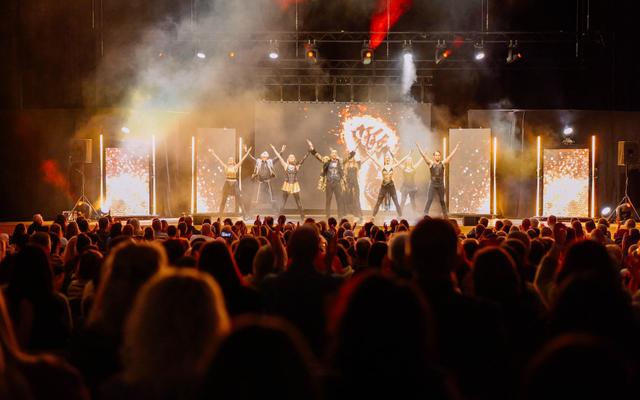
THE ORIGINAL, ALWAYS NEW! Best of Musicals - live in Göttingen GÖTTINGEN HAS EVERY REASON TO LOOK FORWARD TO IT: On Sunday, January 3, 2027, the Stadthalle Göttingen will become the stage for big emotions: Best of Musicals will guest in the city as part of the new 2026/27 tour. From December to March, the successful show will be touring all over Germany and will bring the most beautiful musical highlights to Göttingen at the start of the new year. Best of Musicals stands for an exhilarating evening full of energy, emotion and entertainment. The show combines the most beautiful songs and most impressive moments from the world of musicals – from classics such as The Lion King, The Phantom of the Opera and Dance of the Vampires to newer successes such as Frozen or The Greatest Showman. A top-class ensemble brings this variety to the stage live with strong stage presence and impressive voices. The result is far more than a classic musical gala: charming hosting, humorous scenes and surprising staging create a lively overall experience in which the audience does not just watch, but becomes part of the evening. An evening that connects, inspires and resonates long after it ends: when great musical hits meet joy of performance, closeness and a genuine live atmosphere, an experience is created for all generations. Tickets for Best of Musicals in Göttingen are available now.
Former boxer and still quick-witted: Stefan Schöttler is a man like a tree, and although life has often tried to fell him, the former heavyweight boxer has always gotten back up again. In his show “arschvollglück,” the 1.98 m giant with the big heart offers an insight into the soul of a person who can laugh about his setbacks. Stefan doesn’t tell jokes; he humorously and with plenty of punchlines tells you his life story and how it can work to face your own defeats with humor and still be happy in the end. With pure joie de vivre, he inspires you to keep going, to believe in yourself, and to take your own life into your hands. The questions “What do I really want in life, and what makes me truly happy?” occupied him for a long time. What Stefan really wants is above all one thing: to put a hearty, carefree smile on your face!
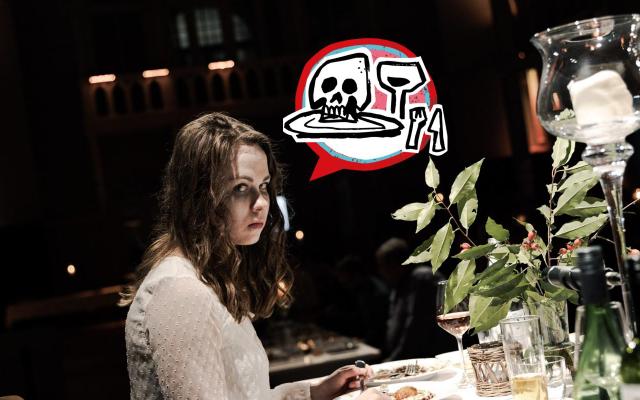
The stage is set for the perfect crime — or is it just for a damn good story? At the True Crime Slam, spoken-word artists from Berlin’s poetry slam scene present real criminal cases and fictional thrillers — but who is telling the truth? The audience decides! Real cases meet invented crimes: true files versus blood-soaked fantasy. Tension hangs in the air, drifting through the room like cold smoke, raising goosebumps on bare skin and provoking dark laughter where it should really hurt. Fact and fiction engage in a merciless duel — every detail an argument, every punchline a stab — and in the end it is not the law that decides, but the audience’s verdict. Don’t worry: it won’t be left alone with this responsible task. Crime experts integrated into the show provide advice and support.
A guided tour of the exhibition with Annegrit Berghoff, exhibition staff member On December 4, 1941, the so-called Polish Penal Ordinance was enacted, a special criminal regulation that rendered Polish nationals in Germany and in the German-occupied territories in Poland completely without rights. Even minor offenses could result in the death penalty. After 1945, this ordinance was classified in the Nuremberg Trials as a war crime and a crime against humanity. One well-known victim is Walerian Wróbel. At the age of 15, he was deported from Poland to Bremen for forced labor and, at 17, was executed under the Polish Penal Ordinance in Neuengamme concentration camp. The guided tour takes the date of the ordinance’s entry into force as its starting point to shed light on the situation of Polish forced laborers both in the occupied territories and in the German Reich. Decrees and ordinances are presented that, against the backdrop of the Nazis’ racist ideas, were directed specifically against Polish citizens. The focus of the tour, however, is on the biographies of people who were deported from Poland to the South Lower Saxony region for forced labor. For individual visitors, the exhibition is also open from 2:00 p.m. to 5:00 p.m.
The bronze and steel sculpture (1973) by Corrado Cagli (Rome) stands in place of the synagogue that was burnt down during the Reichspogromnacht in 1938. To commemorate the victims of the Holocaust, five bronze plaques with the names of the victims from the city and district of Göttingen were placed in the lower section in 1995. <br>
After the demolition of the city walls, the rampart was planted with lime trees in 1763. Of the original planting, only one summer lime tree remains, estimated to be over 250 years old (rampart section between Angerstraße and Lohmühlenweg).<br><br>
The artist used the motif "<em>Brother and Sister</em>" as a symbol. On the back of the stone is engraved: "<em>Brothers Grimm Stone. Göttinger Verschönerungsverein. H. Scheuenstuhl.</em>"<br>
The Göttinger Verschönerungsverein planned the construction in the 1880s. During construction, the association decided to name the tower after former Chancellor Otto von Bismarck. <br>
The Gänseliesel is a tribute to the goose girls who were part of the cityscape back then. Many of these girls were called Elisabeth, which is why the diminutive "Liesel" became their job title.<br><br>For a long time, it has been a firm tradition that the newly qualified doctors of the Georg-August University pay a visit to the Gänseliesel. After the oral examination, equipped with a doctor's hat, they are driven to the market in a decorated handcart.<br><br>The task here is to climb the fountain with athletic effort and plant a kiss on the Gänseliesel. In return, she receives a bouquet of flowers as a thank you. This custom makes the Gänseliesel the most kissed girl in town - although she never kisses back. <br>
The idea goes back to the initiative of private donors from Göttingen and the surrounding area. <br><br>In 1837, seven Göttingen professors protested against the abolition of the constitution in the Kingdom of Hanover by King Ernst August. The university dismissed them and expelled them from the country.<br>The Göttingen Seven stand for civil courage and for the development of liberalism in Germany. The sculpture by Christiane Möbus refers to the equestrian statue of the king in front of the railroad station in Hanover. The pedestal without a ruler is a monument to the sovereignty of citizens, freedom and democracy.<br
Between Düsterer Straße, Nikolaikirchhof, Nikolaistraße and Turmstraße, the district is developing into a creative hotbed with studios, workshops, cafés and stores as well as the renowned Steidl publishing house. <br>
It is a turbulent time full of change and upheaval in the economy, science, culture, and faith. Inventions that had already emerged since 1400 only begin to have their full impact from 1500 onward. Movable-type printing spreads knowledge in the shortest possible time. The discovery and conquest of new lands and continents changes Europe’s understanding of space and time. The ideas of the Reformation alter people’s relationship to faith and to the Church. But they also provide the pretext for wars from which the population suffers. Society is being reshaped. Göttingen, too, experiences decisive changes. For the first time, there are attempts to introduce a school system for boys and girls. Not all plans are implemented, mostly for financial reasons. But a beginning has been made. Quill and ink are ready; writing as in the 16th century can be tried out, and children will find books on this topic as well as coloring sheets. Integrated into the exhibition City. Power. Faith. is the unique church art collection of the Municipal Museum.
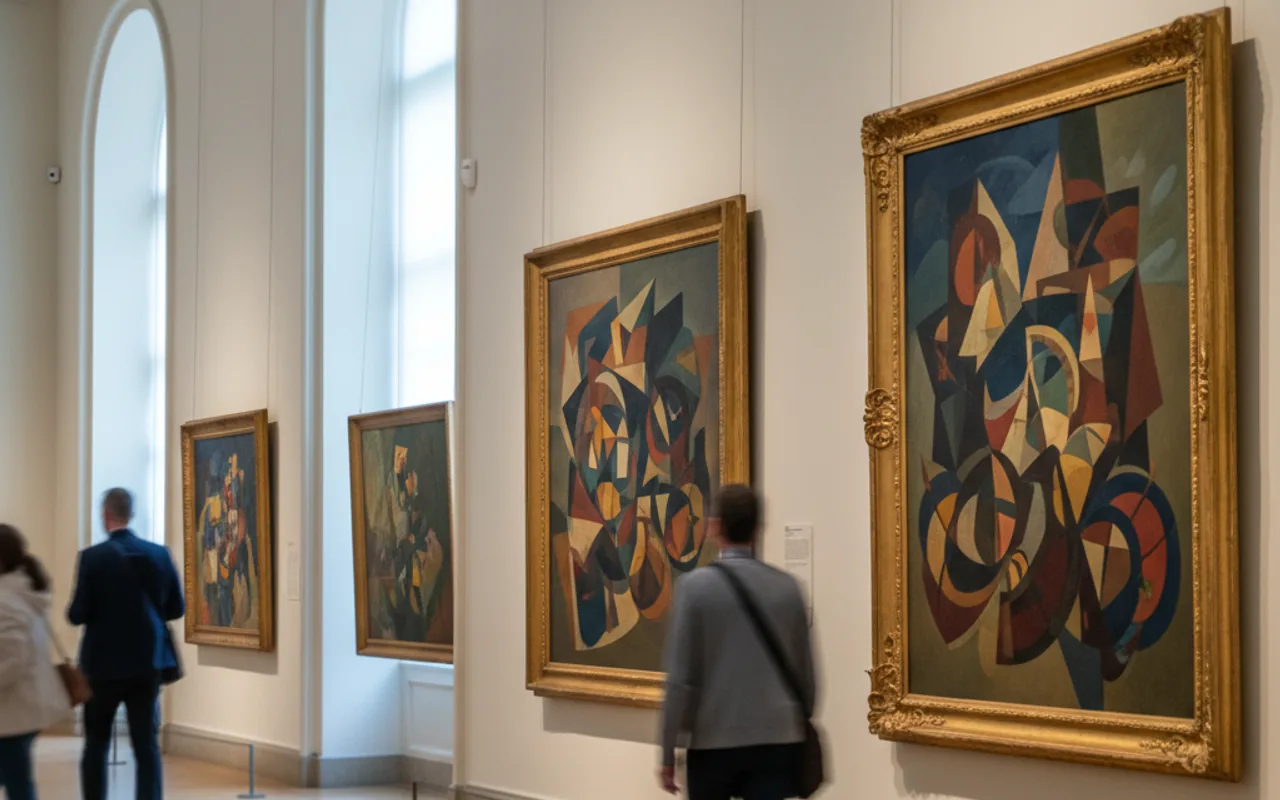
The art collection comprises around 300 paintings, 2,500 drawings, 15,000 sheets of prints and around 100 sculptures. There are also around 100 works by video artists from all over the world and more than 10,000 photographs. <br>
The intersection of Prinzenstraße/Theaterstraße and Weender Straße is called the "navel" by the people of Göttingen. Here stands the bronze sculpture "Der Tanz" (1982) by Bernd Altenstein from Bremen. <br>
<p>The inauguration of the tower took place in 1903. Originally, the monument looked different, as it comprised six pillars arranged in a semicircle around the tower. The pillars can no longer be found on the monument today. In the 1970s, the city decided to keep the monument as Bismarckstein, contrary to proposals to remove it or turn it into a memorial to the victims of the years 1933 to 1945.<br><br>The seven-metre-high tower is popularly known as the "elephant's toilet" due to its size and shape. <br></p>
In its classic form, it offers a surface without an edge. However, the reddish-brown rust tinge and the striking turquoise-blue stripe of paint on the narrow side are less reminiscent of a mathematically determined surface shape than of a river meandering through an earthy landscape. <br>The title given by the artist as an explanation, "The River of Möbius", also points to the transition from a mathematical figure of thought - the Möbius strip - to a sculptural representation of the landscape - the course of the river. Göttingen thus owns one of Willi Weiner's programmatic works with the sculpture made of Corten steel, which is only 64 centimetres high, 214 centimetres long and 114 centimetres wide.<br><p></p>
This is reminiscent of a legend that is linked to the fountain. According to this legend, you could see your unborn siblings in the spring water.<br><p></p>It is said that couples wishing for a girl would leave a gift for the legendary figure at the fountain.<br>
Heinz Erhardt, as traffic policeman Eberhard Dobermann, regulated traffic at Weender Tor in the film "Natürlich die Autofahrer". The filmmakers chose Göttingen as the production location for 97 films that they produced between 1949 and 1961.<br>
Norns (from the Old Norse nornir) are beings in Germanic mythology, some of whom are said to be descended from gods, others from dwarves or elves. However, only the three women of destiny, who embody the personally conceived fatum, are mentioned by name. <br>They are called Urd (that which has become), Verdandi (that which is becoming) and Skuld (that which is to become), meaning past, present and future. The name of the last Norne, "Skuld" (literally = "guilt", or "skal" = should) is also known as the name of a Valkyrie. <br>They live at the root of the world ash tree Yggdrasil at a well, the source of fate, from which they water the sacred world tree and which is called Urdar's Well after the oldest norn. They control the destinies of men and gods by spinning and weaving the threads of fate.<br>
<p>The sculpture was purchased by the city through voluntary donations and cast in bronze. Charlotte Müller sat for the artist in 1932, three years before her death. Chiselled on the front of the plinth is:</p><p></p>"<em>In memory of Mrs. Charlotte Müller, the oldest street trader in the world. Born 18.10.1840, died 08.04.1935.</em>"<br>
The trail starts at Gebhards-Hotel, leads across the city center, past the Deutsches Theater, across Eichendorff-Platz, then past the Hainbund monument and ends at the Bismarck Tower.<br>
Guided tour of the exhibition with Arndt Kohlmann, member of the exhibition team Forced labor was the Nazi injustice that affected the largest number of people. The permanent exhibition “On the Trail of European Forced Labor. Southern Lower Saxony 1939–1945” shows what this looked like in the region. Foreigners forced to work were active in practically every area of the German war economy, present everywhere in towns and villages, and constantly in danger. This overview tour looks at the life stories of individual forced laborers, highlights forced-labor workplaces in Southern Lower Saxony, explains the connection between forced labor and Nazi ideology, and presents the various European perspectives on this crime.
A guided tour of the exhibition “On the Trail of European Forced Labor” with Annegrit Berghoff, member of the exhibition team The quote in the headline comes from Nikolai Timofeyevich Subany, who was deported from Ukraine to Güntersen near Göttingen for forced labor in September 1942 at the age of 17. He was one of more than 2.7 million people from the former Soviet Union who had to perform forced labor in the German Reich between 1941 and 1944. Like him, most came from Ukraine. After the invasion of the Soviet Union on June 22, 1941, the Nazi regime’s policy toward forced laborers became increasingly radicalized. The National Socialists had realized that there could no longer be any talk of a “blitzkrieg”: the war would last much longer than planned. To keep Germany’s economy, including its war economy, going, far more forced laborers would therefore be needed. At the end of October 1941, 85 years ago, Adolf Hitler approved the mass deployment of Soviet prisoners of war and civilians in the German Reich. Until then, for racist reasons, he had had major reservations about employing people from the Soviet Union in the German Reich. Entire villages were deported, and large-scale manhunts took place. The so-called “Ostarbeiter” — about half of them women — were subject to discriminatory special regulations and were required to wear identification. The guided tour focuses on Soviet forced laborers who had to work in businesses in southern Lower Saxony. Their stories show how, in the course of Germany’s war of annihilation against the Soviet Union, millions of people wer
Discover 26 leisure activities, outdoor spots, sports, museums, and workshops in Göttingen for today or this weekend. Current highlights include Best of Musicals, Stefan Schöttler - arschvollglück, True Crime Slam - Murder, Mystery & Mind Games.
Explore 26 leisure activities across outdoors, sports, exhibitions, workshops, and cinema in Göttingen, such as Best of Musicals, Stefan Schöttler - arschvollglück, True Crime Slam - Murder, Mystery & Mind Games.
Open our places and attractions guide at /en/cities/Göttingen/poi for opening hours and addresses.
Yes, visit /en/cities/Göttingen/kinder for curated kid-friendly outings and family workshops.