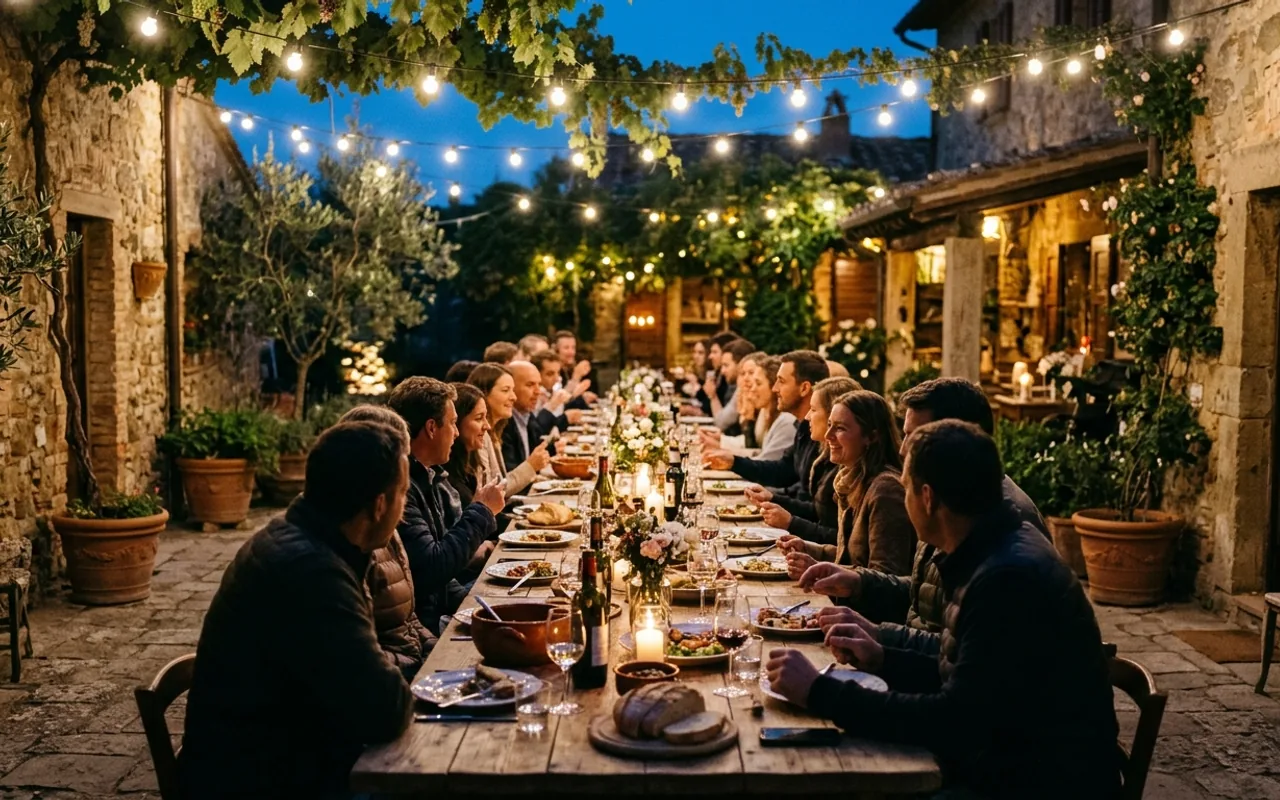
Discover concerts, nightlife, dining, culture and events in Günzburg.
Right in the heart of Günzburg, visitors can expect a refreshing oasis. Located directly on the Danube, the family outdoor pool invites you to cool off on hot summer days. Two large heated swimming pools offer ideal conditions for a refreshing break. You can relax right by the pool or on the sunbathing lawn beneath the shade-giving old trees. For sporting activities, table tennis, beach volleyball, and football are available. Children can enjoy themselves in the heated children's paddling pool, play on the water playground, and use numerous modern play equipment to let off steam. A perfect place for families who want to spend an active and relaxing day.
Günzburg lies on the important railway line between Karlsruhe and Munich, with IC and EC stops, and offers excellent connections to Donauwörth, Regensburg and Mindelheim. The station impresses with modern facilities: charging stations for e-bikes and electric cars, a bicycle parking garage and Wi-Fi ensure comfort. A bistro/café and a kiosk for travel essentials round out the range of services. Günzburg is therefore not only easy to reach, but also an ideal starting point for trips and explorations.
Right next to the Cow Tower is the former Franciscan convent. After the convent was dissolved in 1782, the buildings initially passed into private ownership and were purchased in 1825 by the superior of the English Institute (today: Congregatio Jesu) as a school building. The English Ladies had already been represented in Günzburg with a girls' school since 1758, and the institute's tradition continued until 2017 with a girls' grammar school and a girls' secondary school. Today, girls and boys attend school here. The entire building complex was renovated and modernized in the late 1990s. In spring 2010, the last nuns left Günzburg, bringing the city's monastic tradition to an end.
One of the most beautiful Rococo churches in southern Germany is the Frauenkirche in Günzburg. It is one of Dominikus Zimmermann's most important church buildings and the immediate predecessor of the Wieskirche. During the great town fire of 1735, the Gothic church was destroyed down to the lower part of the tower. Despite the city's strained economic situation, the magistrate decided to commission the then already highly esteemed master builder Dominikus Zimmermann with the new construction. By 1741, the nave and choir were completed; the interior decoration was delayed because of a lack of funds, and the final consecration did not take place until 1780. The floor plan is a rectangle with slightly outward-curving long sides and inward-rounded corners. This creates the impression of an oval inside. The relatively shallow vaulted ceiling is a wooden shell suspended from an elaborate roof-truss structure. The main painting (Crowning of Mary) was created in fresco technique in 1741 by the painter Anton Enderle, who came from Söflingen near Ulm. The groups of figures to the left and right of the two fountain basins (fountains of grace) embody the four known continents of the time: Europe (woman with imperial crown, soldier with Marian monogram on the shield, white horse), Asia (woman offering incense, man in oriental clothing, camel), America (woman with feather crown, attendant figure with umbrella, crocodile), and Africa (dark-skinned woman with turban, elephant). A historical event is depicted in a painting that adjoins the main painting at the southern end of the
At the junction where Rathausgasse meets the market square, there is a peculiarly carved stone set into the roadway. To make the solution a little easier, one should view the object from the market square. The residents of the lower town always felt at a disadvantage in view of the upper town’s success. For centuries resentment simmered, and only after 1945 did these prejudices slowly fade from memory. When the market square was redesigned in 1984, an art teacher and a stonemason recalled the old “enmity,” and came up with a prank. Just in time for the square’s opening, the two had immortalized the “Greeting from Götz von Berlichingen to the Upper Town” in the street paving.
Today, as in times past, when the postal route from Vienna to Paris ran through the market square. Over the 250 meters to the Lower Gate, the pulse of the town can be clearly felt. Especially in the summer months, the square has a magical attraction: then it transforms into Swabia’s longest street café, and during the cultural summer the old town becomes an open-air stage for a wide variety of events. Since 1395, one of the oldest weekly markets in the region has taken place here every Tuesday. Even today, the market remains of great importance to the people of Günzburg and to many visitors from near and far.
Service for Günzburg residents and guests: - Guided city tours - E-bike charging service - Luggage storage - Souvenirs, cycling maps, books and postcards - Information and excursion tips for Günzburg and the region - Free room booking service
In Kapuzinergasse in Günzburg's old town there is a modern bicycle parking facility with 16 weatherproof boxes that offer space for bicycles and luggage. Ideal for cycling tourists: there is an e-bike charging station and a repair station. It is easy to use: simply back the bicycle into the box and pay by debit or credit card. Instructions on the box explain the process. Here, cyclists can park their bicycles safely and enjoy the old town carefree. [Download_PDF_Fahrrad sicher parken](https://www.guenzburg-tourismus.de/fileadmin/user_upload/tourismus/flyer_fahrrad_parken_2022.pdf)
Günzburg was selected in 1764 as the site for a Habsburg mint. Important factors in this decision were its favorable location in the transport and communications network of the time, the available water power of the Günz and its tributaries, and its proximity to Augsburg, from where the required mint metal was obtained. On the ground floor of the building, designed by Joseph Dossenberger and completed in 1767, there were four so-called spindle presses in a large hall, on which silver coins were mainly minted; the upper floors housed the administration. The coin with the longest period of validity in the entire history of money was also produced here: the Maria Theresa thaler. It remained legal tender in Ethiopia until 1945, mainly because its fine weight of 23.389 grams and its fineness (833.333) were never changed. Copper coins were produced in a second mint, which stood outside the city wall together with a hammer mill and a silver refining plant. Coin production came to an end in October 1805, when French troops occupied Günzburg and the town shortly afterward became Bavarian. Since 1809, the mint building has served as the town hall; numerous remodeling measures have greatly altered the interior.
Archduke Ferdinand II of Tyrol (1564-1595) was married to Philippine Welser, a daughter of the well-known Augsburg merchant family. One of their two sons, Karl, took over rule of the Margraviate of Burgau in 1605. His father had intended Günzburg as the residence and had already commissioned the Italian master builder Alberto Lucchese in 1577 to erect a palace befitting his rank, with an associated court church. Travel accounts from around 1600 describe a magnificent interior, but the fire of 1703, alterations in the 19th century, and bomb damage in the Second World War have greatly changed the appearance of the palace. Today, the town hall and the tax office are housed in the extensive complex. The court church was built in 1579/80 and is one of the few surviving church buildings of the late Renaissance in southern Germany. Details of this architectural style, such as Ionic columns and Corinthian capitals, can be clearly seen inside. In 1755, Joseph Dossenberger the Younger added a side chapel in the Rococo style on behalf of the neighboring Piarist college, for which the building served as a school church. It is dedicated to the founder of the order, Blessed Joseph of Calasanza. The church is now deconsecrated; however, a sensitive restoration between 2004 and 2006 has restored much of the building’s former splendor.
Innovative and entertainingly narrated, this audio guide tour in German or English takes you back to the 500-year era of the Habsburgs, who turned Günzburg into “Little Vienna.” This digital city tour with your smartphone starts at the Palace, right by the Tourist Information office. From there, the route leads past Günzburg’s landmark, the “Lower Gate,” to the top attraction, the Frauenkirche – the Rococo jewel and masterpiece of the famous master builder Dominikus Zimmermann. It then continues through picturesque alleyways via Dossenberger Hof back to the starting point. Along the way, you will learn, among other things, what the Austrian double-headed eagle on the entrance portal of the town hall is all about and why one of the most important mints of the Habsburg Empire was established here. The mystery of the “Günzburger Fidla” is solved, and the lively bustle of Günzburg’s market square in the 18th century comes back to life. Why Günzburg had an extra gate just for cows and why the Saubartel stands at Wätteplatz, you will hear in the original voice of city guide Siegfried Ranz, while his colleague Marion Schlaegel расскаls about the life of the tower keeper and petty-minded citizens. ## With GPS to ten exciting listening points At some of the ten listening points, images and information are also displayed on the smartphone screen. All “listening stops” are marked with signs. The smartphone navigates the tour by GPS and automatically starts the audio at each listening point. Route length: 1 km Duration: 30–40 minutes Starting point: Tourist Information G
Thanks to the cooperation between Günzburg restaurateurs, retailers, and the city of Günzburg, public toilets are now available. They are cleaned regularly and well equipped, so you can always feel comfortable in the easily accessible facilities. During the stated opening hours, the toilets can be used free of charge by everyone.
Lucky Bike in Günzburg is your specialist dealer for bicycles, e-bikes and fitness equipment. With a wide selection of models and accessories, you will find everything you need here for your next tour or your workout. The expert bicycle workshop on site offers comprehensive services, from e-bike checks to repairs. Rely on first-class advice and professional service that leaves nothing to be desired – for an optimal riding experience!
Discover 13 curated Community & Social events and highlights in Günzburg on Viventii with times, venues, and tickets. Current highlights include Waldbad Günzburg, Günzburg Station, Maria-Ward-Gymnasium, former Franciscan convent (10).
Viventii currently lists 13 public events, concerts, parties, cultural happenings, and local spots in Günzburg, including Waldbad Günzburg, Günzburg Station, Maria-Ward-Gymnasium, former Franciscan convent (10).
Use Viventii's curated Today, Tonight, Weekend, This Week, Leisure, and Places guides for Günzburg.
Yes, browse free admission events at /en/cities/Günzburg/free and 0% fee tickets at /en/cities/Günzburg/tickets.