Discover concerts, nightlife, dining, culture and events in Ingolstadt.
Die UNESCO-Welterbe-Siedlung von Pestenacker Einlass: 16:00 Kostenfreier Vortrag von Dr. Anneli Wanger-O’Neill (Bayerisches Landesamt für Denkmalpflege) und Barbara Limmer M.A. (kelten römer museum manching) Das 1934 entdeckte Steinzeitdorf von Pestenacker ist eine archäologische Stätte der Superlative. Sie ist nicht nur die besterhaltene Feuchtbodensiedlung Bayerns, sondern zählt auch zu den am besten ausgegrabenen, dokumentierten und datierten Fundstellen Deutschlands. Dank der herausragenden Erhaltungsbedingungen im feuchten Milieu, tausender Funde, naturwissenschaftlicher Proben und moderner 3D-Visualisierung der Grabungsaufzeichnungen erlaubt der Fundplatz einen einzigartigen Einblick in das Leben und die Landschaft vor 5500 Jahren im bayerischen Alpenvorland. Auf Basis zahlreicher Forschungsarbeiten sowie ihrer eigenen wissenschaftlichen Untersuchungen zeichnen Anneli Wanger-O’Neill und Barbara Limmer ein detailreiches Bild vom Alltag der Bewohnerinnen und Bewohner dieser Siedlung, die aufgrund ihrer großen überregionalen Bedeutung seit 2011 Teil des UNESCO-Welterbes »Prähistorische Pfahlbauten um die Alpen« ist. Sie liegt im Tal des Verlorenen Baches bei Landsberg am Lech und wurde zwischen 1988 und 2004 großflächig ausgegraben. Ihre Gründung kann dendrochronologisch exakt auf das Jahr 3495 v. Chr. datiert werden, wie die teils komplett erhaltenen Hölzer von Hausfundamenten und des ersten Dorfzaunes belegen. Werkzeuge, Vorräte, Alltagsgegenstände, Abfall sowie deren Verteilung in der Siedlung geben Auskünfte über Handwerkstechniken, Werkplätze, das Speisenangebo
Volkstümlichen Glauben im frühchristlichen Assos (Türkei) Einlass: 16:00 Kostenfreier Vortrag von Prof. Dr. Beate Böhlendorf-Arslan (Philipps-Universität Marburg) Assos im nordwestlichen Kleinasien ist bislang vor allem mit der Antike verbunden – sei es durch den dorischen Athena-Tempel auf der Akropolis oder durch den mehrjährigen Aufenthalt des griechischen Philosophen Aristoteles. Bislang wurde jedoch wenig Beachtung darauf gelenkt, dass die Stadt nach der Ausbreitung des Christentums eine neue Blütezeit erlebte. Im 6. Jahrhundert n. Chr. dominierten Neubauten das städtische Bild: Antike Strukturen wie die Agora, das Gymnasion und die Thermen wurden zunehmend durch Handwerksbetriebe, Wohnhäuser und Kirchen überbaut. Assos war zu dieser Zeit dicht besiedelt. Eine mögliche Ursache für die gesteigerte Attraktivität könnte eine außerhalb der Stadtmauern gelegene, in den Felsen eingetiefte Grabstätte einer unbekannten heiligen Person sein. An diesem Grab stellte man Reliquien her, etwa heiliges Wasser oder Öl, das mit Tüchern aufgetupft in kleinen Bronzebehältern aufbewahrt wurde. Die neue Pilgerkirche von Assos war Ziel der Bevölkerung des Umlandes, aber auch Reisende größerer Wallfahrten und Händler auf dem Weg von Konstantinopel nach Ephesos oder Griechenland machten in Assos Station. Sie übernachteten in einer Herberge in der Stadt, gingen den neu geschaffenen Prozessionsweg entlang zur Pilgerkirche und wurden dort vielleicht sogar getauft, bevor sie sich dann mit einem Mitbringsel, z. B. einem Amulett zum Andenken an die verehrte Person, wieder auf den Weg machten.
Heute fahren die Eisenbahnen im Spielzeugmuseum wieder! Für Klein und Groß zum Staunen und Beobachten! Eisenbahnen und Dampfmaschinen gehören zu den Favoriten des technischen Spielzeugs. Im Stadtmuseum gibt es viele Nachbildungen, die in ihrer Funktionsweise weitgehend identisch mit den Lokomotiven, Schienenfahrzeugen und Kraftmaschinen des Industriezeitalters sind. Seit Generationen faszinieren sie Kinder – und auch Erwachsene. Zugleich bieten sie einen spielerischen Zugang zu physikalischen und technischen Problemen.Vorführungen für Gruppen sind auf Anfrage und nach Anmeldung jederzeit möglich. Die Vorführung richtet sich gleichermaßen an die jüngsten Besucherinnen und Besucher sowie an alle Interessierten, egal welchen Alters. Es ist lediglich der reguläre Museumseintritt zu bezahlen.
The museum’s Baroque main building, the Alte Anatomie, was closed from 2015 to 2020 for renovation and restoration work. In October 2020, it reopened with a new permanent exhibition. The content concept developed by the museum team is divided into two parts. The upper floor is dedicated to the “Medical World of the 18th Century,” the period when the medical faculty of the Bavarian State University was housed in what is now the museum building. On the ground floor, 21 “Strong Things” each open up different perspectives on the history of medicine. Two cabinets on the limits of medicine (“Need teaches prayer”) and on the university’s most famous student from Ingolstadt (Victor Frankenstein) round off the museum visit. In 2021, the permanent exhibition was awarded the Bavarian Museum Prize. An event from the "Wintertime - Museum Time" series between October and Easter in cooperation with the museums in the Altmühltal Nature Park.
The collection of the City Museum stretches from the Bronze Age through the Middle Ages to the present day. The Danube region is a rich archaeological landscape. A department for prehistory and early history provides information about traces of settlements that date far before the year 0. The Ingolstadt amber necklace on display is considered one of the most important amber finds in ancient Europe. The collection section "Ingolstadt in the Middle Ages" takes a look at Ingolstadt's most glorious period to date, when the city was expanded under the Wittelsbach dynasty and the university was founded. Visitors can find out what the Ingolstadt "Schanzers" are all about and how they once defeated the Swedes in the section entitled "The Ingolstadt Fortress". At the end of the tour, visitors return to the present and learn a lot about the city's contemporary history.
"Therefore, my child, practise your cooking skills quickly and learn in good time: Prepare good food!" This is how the doll mother Liese once prepared young girls for their future role. The collection of popular toys from the last 100 years - dolls, steam engines, puppet theatres and much more - also provides eloquent information about the social environment of children from 1900 to the present day.A rare tin-plate railway set (gauge 0) from the 1930s is regularly demonstrated in action.
The local history museum tells of life in the Sudetenland. Documents, photos, maps, display boards and memorabilia provide information about the town of Niemes in northern Bohemia and the district of Prachatitz in the Bohemian Forest. The integration of the expellees into Ingolstadt's economy and society is also documented.
Bladder stones were already surgically removed in ancient Greece - a life-threatening and very painful procedure at the time. Visitors to the Museum of Medical History, the only specialist museum of its kind in Germany, can learn about this and much more.When redesigning the permanent exhibition, the focus was placed on the history of medicine in the 18th century due to the history of the Baroque building of the "Old Anatomy" as a place of education at that time - when "the medical heart of Bavaria" beat here. Away from the usual chronology of development towards significant "strong things" - this trend also continues in the other areas, creating space for more differentiated and critical perspectives on the history (and present) of medicine.In the most magnificent room and centrepiece of the museum, the former "Theatrum anatomicum", anatomical preparations are exhibited, but also objects from botany. The collection of medical technology covers modern medicine and its treatment methods - from the reconstruction of the first artificial kidney to the topic of "healing with lasers and shock waves". On the grounds of the university's former botanical garden, visitors can also explore a medicinal plant garden with scent and touch stations.
It continues the tradition of the Botanical Garden of the Faculty of Medicine of the former State University of Ingolstadt. It bordered the anatomy building - now a museum - and served the academic instruction of medical students. Today it displays around 200 different medicinal plants, cultivated according to groups of active ingredients in a baroque garden setting. A fragrance and tactile garden with medicinal herbs in raised beds with Braille labels offers an additional attraction for blind visitors and wheelchair users.
The Städtische Galerie im Theater Ingolstadt (Municipal gallery in the theatre) presents alternating exhibitions, organised by both the City of Ingolstadt and the Ingolstadt Art Association. Around six different exhibitions take place every year, showing works from various artistic genres. In addition to artists from the region and throughout Germany, works by artists from Ingolstadt's twin cities are also occasionally presented.
In February 2000, the Lechner Museum, another venue dedicated to contemporary art, opened in Ingolstadt. Through minimal alterations to a former factory hall, a functional museum building was created that is architecturally understated and serves the exhibited art. The life's work of Alf Lechner, one of the most important steel sculptors of the 20th century, is presented here in a permanent exhibition. By rotating the exhibits, ever new facets, perspectives, and aspects of Lechner's works will be shown. In addition to the diverse sculptural works, drawings are also exhibited. In addition, exhibitions by other internationally recognized artists are held.
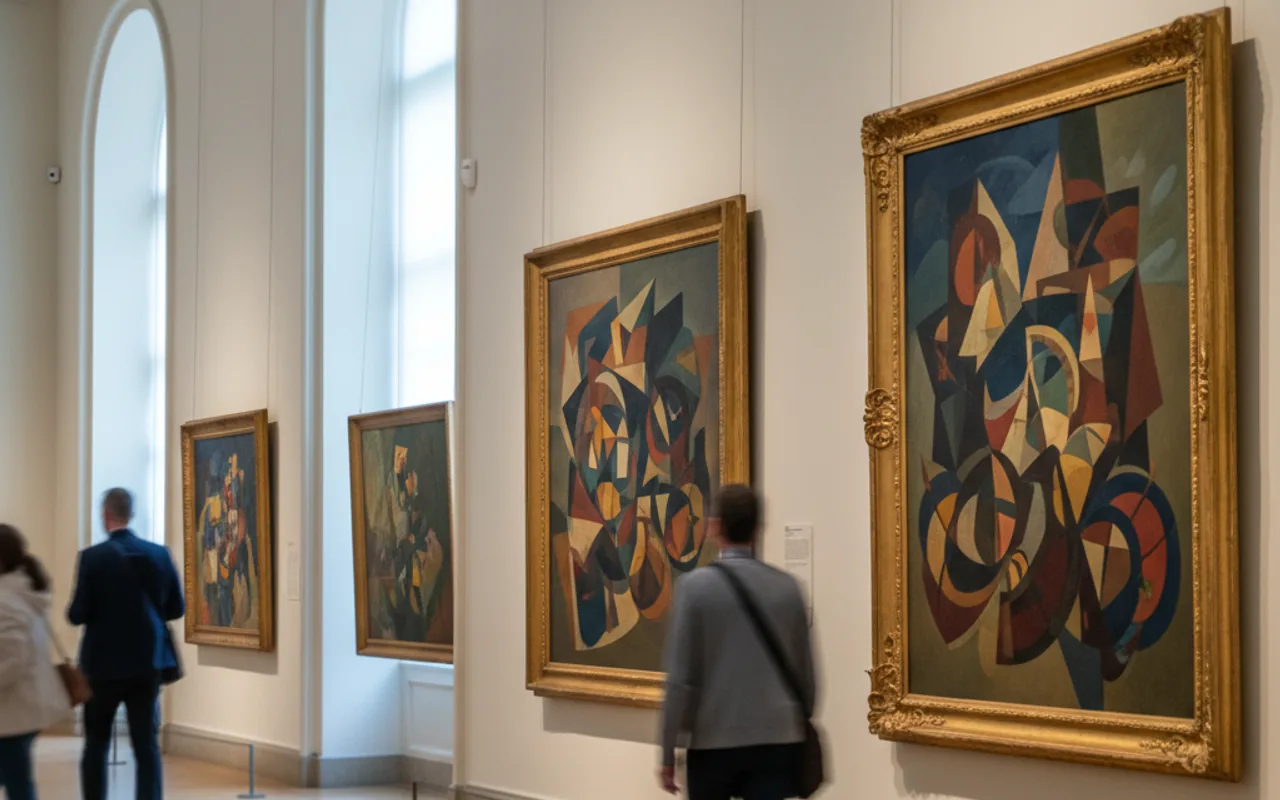
Concrete art and design are the focal points of the museum, which was founded on the collection of Professor Eugen Gomringer. Numerous currents of concrete art are represented here, alongside well-known works by Josef Albers and Max Bill, for example, as well as exhibits by young artists.The design collection illuminates the interfaces between concrete art and design, including in the Ulm School of Design and the Weimar and Dessau Bauhaus.Large sculptures by Ben Muthofer, Marcello Morandini, David Rabinowitsch and Ulrich Rückriem, among others, can be seen in the sculpture garden. The museum is scheduled to move to the historic foundry hall of the former Royal Bavarian Gun Foundry Ingolstadt. Until the necessary construction work is completed, the museum will continue to be located in the Donaukaserne.
Germany's largest permanent exhibition on the First World War is located in the former Reduit Tilly fortress, just a few minutes' walk from the New Palace. It begins with the founding of the German Empire in 1871 and ends in 1918 with the reorganisation of Europe by the victorious powers, explaining the political, economic and ideological background to the war alongside the military events. However, the focus of the exhibition is on people: 1500 objects in 30 rooms and displays illustrate the gruelling and brutal everyday life at the front as well as the suffering and privations of the families at home or the wounded soldiers in the military hospitals.
Hitler's putsch and the Schwabing riots, the VW Beetle and the Munich Olympics - the Bayerisches Polizeimuseum (Bavarian Police Museum) brings back the history of the past 100 years, from the turbulent times of the Bavarian revolution in 1918/1919 to the battle for the Wackersdorf nuclear reprocessing plant in the 1980s, from police training in the Third Reich to border security during the Cold War. The exhibition provides an insight into the inner workings of the police force, showing a wide variety of known and unknown items of equipment as well as surprising personal documents.
Relaxed bike tour through the Altmühl Valley – ideal for families, with nature, history, and many small discoveries ## In brief - 24 km - approx. 2 hours - family-friendly - hardly any climbs ## See & enjoy This circular tour combines everything that makes a perfect family bike ride: flat paths, safe routing, and varied stops. Highlights Historic old town of Beilngries - fortified church of St. Vitus in Kottingwörth - Töging Castle - adventure village “Alcmona” - Dietfurt lock - Ludwig-Danube-Main Canal - golf course Places to stop for refreshments Beilngries airfield - Kottingwörth - Grögling - Töging - Dietfurt - golf course ## Our route at a glance Start in Beilngries You start relaxed in the center of Beilngries and follow the well-developed cycle path along the Altmühl. Towards Dietfurt The route leads through open countryside – ideal for warming up, with no climbs! Culture & history In Kottingwörth, St. Vitus awaits to be admired; in Töging, another historic building - Schenken Castle Along the canal The return route follows the Main-Danube Canal – quiet, safe, and especially family-friendly. ## Route description Elevation gain: 30 m Travel time: approx. 1.5 hrs at 13 km/h Surface: 80% asphalt, 20% gravel
The Ingolstadt City Museum's collection of historical agricultural implements and machinery is so extensive that a branch has been opened in a farmhouse in the Hundszell district. Here, the changes in the world of farming are presented against the background of agricultural development in Ingolstadt (urban farming) and its surrounding area over the past 200 years. The main focus of the exhibition is on agriculture, livestock breeding and rural transport.
Discover 16 curated Exhibitions & Museums events and highlights in Ingolstadt on Viventii with times, venues, and tickets. Current highlights include Bayerns Pompeji der Jungsteinzeit, Kirchen, Reliquien und Pilger, Vorführung der Modelleisenbahn im Spielzeugmuseum.
Viventii currently lists 16 public events, concerts, parties, cultural happenings, and local spots in Ingolstadt, including Bayerns Pompeji der Jungsteinzeit, Kirchen, Reliquien und Pilger, Vorführung der Modelleisenbahn im Spielzeugmuseum.
Use Viventii's curated Today, Tonight, Weekend, This Week, Leisure, and Places guides for Ingolstadt.
Yes, browse free admission events at /en/cities/Ingolstadt/free and 0% fee tickets at /en/cities/Ingolstadt/tickets.