Discover concerts, nightlife, dining, culture and events in Kleinheubach.
The Hofgarten in Kleinheubach was built in 1812 for the princely family of Löwenstein and used as a riding hall until 1930. After that, this hall was made available to the Red Cross and later to the gymnastics club as a storage facility and gymnasium. After 1945, this hall was converted into a theater and cinema hall. In 1947, the Catholic church building association acquired the hall. Plans called for turning this building into a church. After the association was dissolved in 1963, the building passed into the ownership of the Catholic parish. In the years that followed, the Hofgarten Hall was used as a dance hall, for carnival sessions, and for municipal events such as town meetings, senior citizens' days, and exhibitions. In order to keep it accessible to the public, extensive renovation work would have been necessary. The parish therefore decided to sell the hall to the market municipality, which has owned the hall since October 1990. Rental: Market Kleinheubach Friedenstr. 2 63924 Kleinheubach Tel. 09371-971624 [www.kleinheubach.de](https://www.kleinheubach.de/kultur/kulturzentrum/index.html)
Behind the Old Town Hall, in the center of the village, the municipality has created a dignified memorial site for the Jewish citizens deported from Kleinheubach. Here you will also find the sandstone ceiling roller, which is intended to commemorate the fate of those deported; the second ceiling roller forms part of the memorial erected for the deportees of Lower Franconia in the Ringpark in Würzburg. The history of the Jewish community of Kleinheubach and its institutions is explained on information panels and a site map. This is also the place for the Stolpersteine.
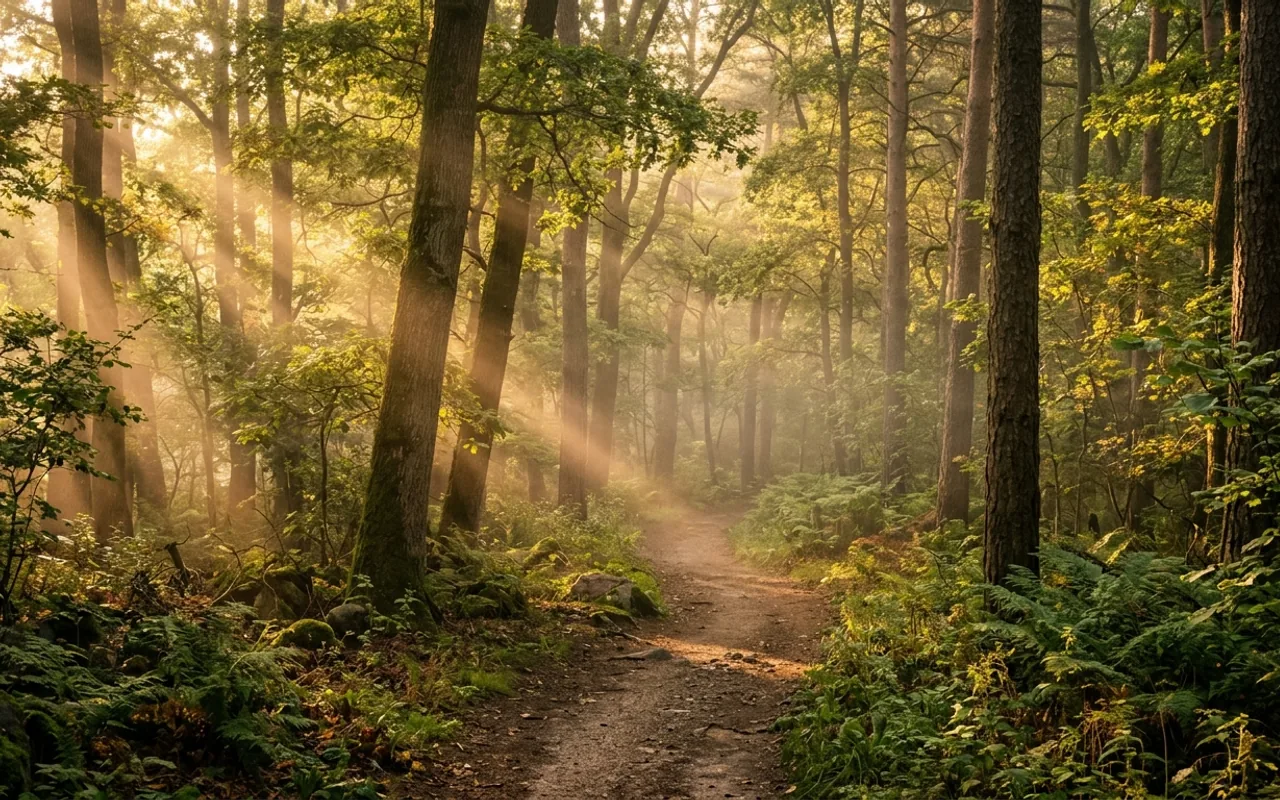
The three wings of the palace and the two side buildings were once surrounded by an honor court with railings, a gate, and a guardhouse. But at the beginning of the 19th century, this strictly central layout was redesigned. In front of the palace, a broad sloping lawn with a new entrance was created; by contrast, the driveway was moved to the village side, toward Hirschplatz. The flanking colossal sandstone lions are works by the Hanau sculptor Heinrich Philipp Sommer (1778–1827). The landscape garden-style park was laid out in 1816–18; it surrounds the palace and extends far in the direction of Miltenberg. The meadows with wide sightlines and groups of trees, some with exotic species, combined with the natural vegetation of the Main riverbank, are appealing. In 2017–2019, 150 trees from all continents were planted and flower and bee meadows were created. The trees continue the park’s tradition. At the same time, they are an attempt to cultivate tree species in the face of climate change that can survive extreme weather conditions. The English park is freely accessible and invites visitors to take long walks; only the winery, the immediate surroundings of the palace, and a park feature are in the private area.
The old center of Kleinheubach is formed by a four-sided street layout that at first glance appears to be a uniformly planned complex, although its four streets originated in different centuries. The gently curved Marktstraße forms the original part. It is part of the ancient imperial roads that led from Frankfurt upstream along the Main at the Miltenberg bend toward Nuremberg or Augsburg. In the middle is the fortified church complex with the Protestant church, next to it Fahrgasse leading to the Main. Although Kleinheubach had several local lords, it never belonged to the Archbishopric of Mainz; the Reformation was introduced here in 1556 under the Counts of Rieneck and remained in place in the town. Around 1600, a new street was laid out at right angles to Marktstraße when Count Georg III of Erbach built his Renaissance palace, Georgenburg. Then called Burgplatz, it provided space for new manor farms, of which only a few gate arches at the entrances have survived. Later, the classical servants' building was erected on the opposite side, hence the present-day name Baugasse. The construction of Georgenburg shifted the route of the imperial road out of Kleinheubach. This brought advantages for the town, because it now lay next to the busy imperial road. This is how today's Hauptstraße came into being, which was not built up until after 1800. The four-sided layout was completed around 1835 with the creation of Bachgasse. A well-conceived plan made it possible to build comparable yet differently sized houses for the growing number of families. In the middle of this stree
In the Museum of local history Kleinheubach (Heimatmuseum Kleinheubach), the local history association mainly exhibits handicraft objects and items from the (formerly) local cooker, ceramics and piano factories. In addition, the historical development of Kleinheubach is presented.
Discover 5 leisure activities, outdoor spots, sports, museums, and workshops in Kleinheubach for today or this weekend. Current highlights include Hofgarten, Memorial Site Deportations 1941-1944, Palace Park.
Explore 5 leisure activities across outdoors, sports, exhibitions, workshops, and cinema in Kleinheubach, such as Hofgarten, Memorial Site Deportations 1941-1944, Palace Park.
Open our places and attractions guide at /en/cities/Kleinheubach/poi for opening hours and addresses.
Yes, visit /en/cities/Kleinheubach/kinder for curated kid-friendly outings and family workshops.