Discover concerts, nightlife, dining, culture and events in München.
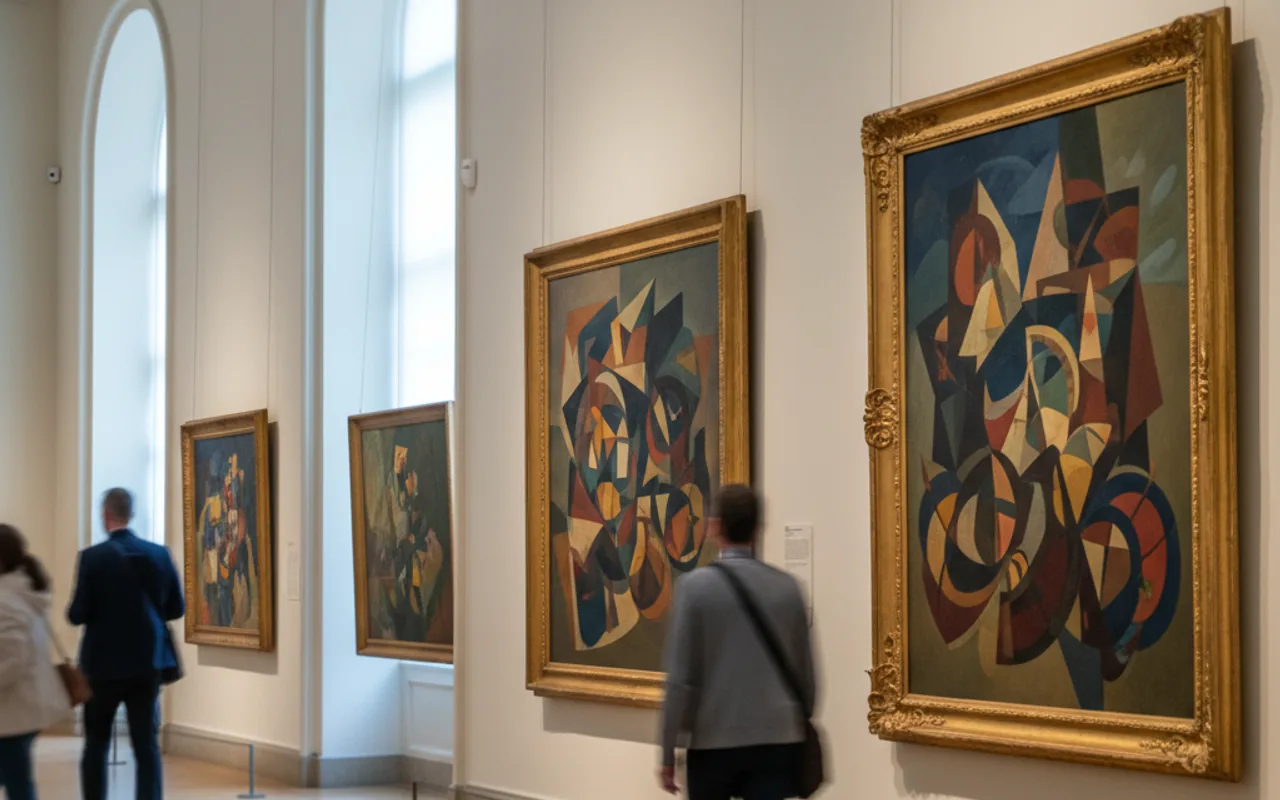
Die Eröffnung erfolgte 1929. Von 2009 bis zur Wiedereröffnung am 8. Mai 2013 wurde das Lenbachhaus generalsaniert und um einen Erweiterungsbau des Architekturbüros Foster + Partners ergänzt. Direktor des Museums ist Matthias Mühling. Er übernahm das Amt zum Jahreswechsel 2013/14. Zuvor wurde das Museum u. a. von Hans Konrad Röthel (1956–1971), Erika Hanfstaengl (1971/72 kommissarisch), Michael Petzet (1972–1974), Armin Zweite (1974–1990) und Helmut Friedel (1990–2013) geleitet. Die Städtische Galerie im Lenbachhaus ist Teil des Kunstareal München in der Maxvorstadt. Hier können 18 Museen und Ausstellungshäuser sowie ungefähr 40 Galerien und sechs Hochschulen fußläufig erreicht werden. Das Museum gehört der MuSeenLandschaft Expressionismus an, zusammen mit dem Museum der Phantasie (»Buchheim-Museum«) in Bernried am Starnberger See, dem Franz Marc Museum in Kochel am See, dem Museum Penzberg sowie dem Schloßmuseum Murnau.
The Bürgersaalkirche is the headquarters of the Munich Marian Men's Congregation, founded in 1610, but also the place of activity and veneration of Father Rupert Mayer S.J. The first part of the museum is dedicated to his life and work as a pastor and resistance fighter against National Socialism. The second part documents the cultural and devotional importance of the congregation for the city of Munich, which is reflected in the valuable donations to the congregation. Closely connected with Munich's city history is the "Augustinerkindl", a Christ child made of wax, which still enjoys great veneration.
Whether Nike of Samothrace, Discus Thrower, Heracles Farnese, Laocoongroup or Apollo from the Belvedere - world-famous statues of ancient gods, heroes and humans are on display here, the originals of which are scattered in major museums all over the world. The Cast Museum, with its focus on Hellenistic sculpture and Roman portraiture, presents the original plaster casts in two 18-metre-high, light-flooded halls: 16 times Aphrodite, 20 times Dionysus, almost 400 statues on 900 m² on the ground floor alone leave a lasting impression. And since some of them were already created in the 19th century, some of them transmit the ancient statues in a more complete state than the originals today. An architectural model of the Parthenon of Athens also dates from this period. The colourful reconstruction conveys a realistic impression of the splendour of ancient houses of worship.
The Galerie Handwerk, as a cultural institution of the Chamber of Crafts for Munich and Upper Bavaria, presents a multifaceted picture of Bavarian craftsmanship. Its temporary exhibitions reflect the diversity of craftsmanship, from traditional to avant-garde approaches. The exhibitions at Galerie Handwerk also have a supra-regional and international focus. In this way, it makes a significant contribution to the communication and preservation of craft culture worldwide.
Spectacular criminal cases, the Olympic assassination and also the legendary radio patrol "Isar 12" are inseparably linked with the Munich police. But the big operations and TV heroes are only part of the Münchner Polizeimuseum (Munich Police Museum). Right in the heart of the police headquarters, visitors can get to know the work of the law enforcers better. Starting with the occupation of the building in 1913, the exhibition leads chronologically through the century. The respective historical stations are juxtaposed with a current topic from the present, which represents either today's police organisation or efforts in the area of prevention. In addition, the museum wants to offer a "space" where the police can enter into conversation with the citizens - or vice versa.
Since 1966, the Hunting and Fishing Museum has been located in Munich's pedestrian zone. Today, it is one of the most important hunting museums in the world.
The portal of the completely underground Egyptian Museum looks like the entrance to an ancient Egyptian royal tomb - and surprises visitors after they pass through with rooms illuminated by daylight. But it is not only the architecture that is impressive: the quality of the collection and the focus on ancient Egyptian art make the museum unique. All epochs are represented with masterpieces of international importance, with a special focus on the field of circular sculpture. The compactness of the exhibition enables visitors to gain an overview of 5000 years of art and culture in ancient Egypt in an exciting and informative way. Numerous offers are aimed specifically at children and families.
Due to its unique position in Germany as a university institution with archives and exhibition rooms, the TUM Museum of Architecture combines collection, teaching and research. With over 600,000 drawings, 200,000 photographs, 1,500 models and other media - including works by Leo von Klenze, Friedrich von Gärtner, Gottfried Semper, Theodor Fischer, Hanna Löv, Paul Schneider-Esleben, Karljosef Schattner, Sigrid Neubert and Behnisch & Partner - the archive is one of the largest architecture collections in the German-speaking world. As a place and meeting point for all those interested in architecture, changing exhibitions on historical and current topics have been shown in its own exhibition rooms in the Pinakothek of Modern Art (Pinakothek der Moderne) since 2002, complemented by publications, expert guided tours and events.
Founded around 100 years ago, Die Neue Sammlung is considered the oldest design museum in the world - long before the word design with this meaning even existed in the German-speaking world.The "Design Vision" at the entrance to the exhibition already gives an idea of the broad spectrum of the collection. Individual pieces are presented here like in a two-storey-high set case, from visionary ideas to everyday objects. Whether individual pioneers from the early days of industrialisation, Bauhaus, anti-design or post-modernism up to the 21st century: the diversity of the objects allows the development of design to be presented in the most varied facets. In its "permanent collection", this state museum today preserves the world's largest design collection with around 100,000 objects from the fields of industrial design, applied art and graphic design and is one of the leading museums on this subject for the 20th and 21st centuries.
With its approximately 130 rooms, the Munich Residenz is one of the most important spatial art museums in the world. It developed from a small moated castle built in 1385 and was the residence and seat of government of the Wittelsbach rulers until 1918. Largely destroyed in the Second World War, the extensive complex with its ten courtyards was rebuilt in a lengthy restoration and reconstruction project. The residence contains period rooms from four centuries, most notably the Antiquarium (the largest secular Renaissance hall north of the Alps), the rooms from the early 17th century (including a room from the 18th century), and the rooms from the 18th century (including a room from the 18th century). The rooms from the early 17th century (including the Rich Chapel, Stone Room and Trier Room), the magnificent Rococo creations (Ancestral Gallery and Rich Room by François Cuvilliés the Elder) and the Neoclassical Royal Building by Leo von Klenze are all worthy of special mention. In addition, special collections are on display: silverware, relics, paraments, bronzes, porcelains from Europe and East Asia as well as a comprehensive collection of miniature painting from the 16th to the 19th century.
You don't have to become an astronaut to touch cosmic matter - a visit to the Museum Mineralogia München. Crystals in nature and technology is enough! Here, a 289 kg iron meteorite from Namibia invites you to "grasp" it with your hands, amidst rare stony meteorites from Mars and the moon. The surrounding showcases are also a little "otherworldly", with colourful glittering gemstones and fluorescent minerals waiting for visitors. With the accompanying explanations and interactive experimental arrangements as well as changing special exhibitions (for which the permanent exhibition is sometimes dismantled), the museum, as part of the Mineralogische Staatssammlung München (Munich State Mineralogical Collection), provides an exciting introduction to the science of mineralogy.
If you follow the loud "Tschätteräng!" of the mechanical striking mechanism in the passageway of the old town hall tower, you will arrive at the Munich Toy Museum. On four floors of the tower, the extensive collection of the caricaturist Ivan Steiger is exhibited with toys of various kinds, mainly from the early 20th century.
The Artothek in Munich is not only a gallery, but also an art lending centre. Here, interested parties can borrow works of art from Munich for a small fee. The concept is similar to that of a library and makes Munich's current art landscape accessible to a broad public. A varied exhibition programme of contemporary works underlines the communicative character of the Artothek and showcases the city's multifaceted art production.
The Munich locksmith Kilian displays a collection of locks and keys from the fifth century BC to modern times.
The Galerie Bezirk Oberbayern is an inclusive and barrier-free venue for contemporary art in the centre of Munich. Changing exhibitions show a diverse spectrum of painting, graphics, sculpture, installation and photography. Each exhibition can be experienced in an easily understandable and sensual way. Touch tours, guided tours in easy-to-read language and Museum Signer tours in German sign language make art accessible to everyone.
In order to awaken an understanding for art in future priests and to prepare them for the proper handling of works of art in their future churches, the then director of the Ducal Georgianum - incidentally the second oldest seminary in the world - Dr Andreas Schmid compiled a comprehensive collection of religious art from 1885 onwards. The main focus of the rich holdings (approx. 600 objects, of which approx. 300 are on display) are late Gothic sculptures, especially from the Allgäu region around Immenstadt. In addition, there are paintings and liturgical utensils from the Romanesque period to the 19th century.
The Galerie der Künstler, organised by the Berufsverband Bildender Künstler*innen München und Oberbayern e.V. (BBK), acts as an important interface between artists, the public, galleries, exhibition venues and the press. As a promoter of young artists, it offers a representative exhibition space on the ground floor of the Altes Nationalmuseum. The gallery goes back to an initiative of Prince Regent Luitpold and today presents contemporary art in the historic rooms of the museum. The BBK has set itself the task of supporting young artists from Munich and Bavaria and promoting their artistic development.
The Bayerisches Nationalmuseum (Bavarian National Museum) is one of the major European museums dedicated to both the fine arts and cultural history. The core area of the diverse holdings, which range from late antiquity to the early 20th century, is southern Germany with a focus on Bavaria. The museum was founded in 1855 by King Maximilian II. Since 1900 it has been housed in the building designed by Gabriel Seidl, one of the most important and original museum buildings of its time.Building on the art collections of the Wittelsbach dynasty, the museum's historic interiors house precious paintings, sculptures, tapestries, furniture, weapons and handicrafts from the early Middle Ages to Historicism. Particularly noteworthy are the numerous works by the famous South German carvers Hans Multscher, Tilman Riemenschneider, Hans Leinberger, Johann Baptist Straub and Ignaz Günther. are further highlights of the collection. One focus of the permanent exhibition is devoted to Baroque luxury in arts and crafts, from precious Nymphenburg porcelain to splendid garments. The museum also presents specialist departments on cultural history, including music history and games. The folklore collection includes furniture and stoveware from Bavaria as well as the world-famous collection of cots with examples from the 17th to 19th centuries from the Alpine region, Naples and Sicily. The collection of Dr. Gerhard Bollert, the last large German private collection of medieval sculpture, is presented in a separate wing of the museum as a unique document of the collector culture of the early 20th cen
From atomic physics to aeronautics and space travel, from chemistry to bridge and hydraulic engineering, from musical instruments to health - the thematic range at the Deutsches Museum (German Museum) in Munich is almost endless, making it one of the most important natural science and technology museums in the world. The unique collection of printing presses and engines through to large aircraft immerses visitors in the fascinating world of technology. Demonstrations such as the model railway, the microscopic theatre or the chemistry shows impressively convey scientific relationships and, for example, the rotation of the earth can be experienced live on Foucault's pendulum. Here, science is combined with vividness and the multifaceted topics are explained so simply that even children can understand them. For little explorers aged three to eight, there is a special children's area with numerous interactive stations for playful discovery. The Deutsches Museum (German Museum) also includes the Deutsches Museum Verkehrszentrum (German Museum Traffic Center) on the Theresienhöhe, the Flugwerft Schleißheim and the Zukunftsmuseum (Museum of the Future) in Nuremberg.
The Alpine Museum brings the joy of the summits to the big city. Works of art from Dürer's time to the present day show the fascination that has emanated from the Alps for centuries. Historical documents, photos, posters and equipment tell of the development of the mountains from a scientific, touristic, political and sporting perspective. The latter is particularly highlighted in the permanent exhibition "That's why mountains". This is about the extraordinary relationship between mountaineers and the mountains. Why are summiteers, Alpine fans and hikers drawn to the mountains? Interviews, paintings, historical and current mountaineering equipment and much more shed light on the topics of adventure, body, performance, nature and community in mountain sports in a highly interactive way. Every year, larger special exhibitions are dedicated to current, historical and cultural-historical themes of alpinism.
"The home consolidates peace in the family, which is the foundation for peace in the state," was the credo of the founder of the Borstei housing estate, Senator Bernhard Borst, who completed it in 1929. The small museum documents his life's work and the history of Borstei. The large parks of the listed settlement have over 60 works of art that can also be visited.
Classics and innovations meet at the BMW Museum. Here, everything revolves around 100 years of company, brand and product history. The focus is on 125 vehicles and engines, such as series-production cars from all eras, like the BMW Isetta, or the first aircraft engines, the first motorbike, the BMW R 32, but also the Formula 1 winning car from 1983. In addition, individual areas are dedicated to special topics such as design, engines and motor sports. Together with the BMW Group Plant and BMW Welt, the BMW Museum forms the company's brand experience in Munich.
Erwin von Kreibig (1904-1961) was a "typical" Schwabing artist of the 1920s and early 1930s. He worked as a draughtsman and illustrator for the magazines Simplicissimus and Jugend, among others, but also created numerous paintings and even supplied galleries in the USA. In 1961 he became the winner of the first Schwabing Art Prize for Painting. The Erwin von Kreibig Museum (Erwin von Kreibig Museum) in the southern palace rotunda of Schloss Nymphenburg (Nymphenburg Palace) shows Kreibig's artistic estate in its permanent and special exhibitions. In addition, the museum, which is run by the foundation of the same name, holds exhibitions of works by other artists.
A collection of Nymphenburg porcelain unique in the world is on display in Nymphenburg Palace, Munich.
Climb aboard, please! What does it feel like to drive an underground? What does a tram look like from below? Visitors can find out all this and much more at the MVG Museum (Munich Transport Company Museum). On an area of over 5000 m², around 25 historic trams, buses and work vehicles, as well as models and films, tell the story of 130 years of public transport in Munich.
Once the most precious horses of the Elector stood here, today the historic "Leibpferd-Stallung" of Schloss Nymphenburg Palace houses a world-famous collection of historic state carriages and sleighs, riding equipment and harnesses owned by the Wittelsbach dynasty.Highlights of the collection, which spans three centuries, are the coronation carriage of Emperor Karl VII (Nymphenburg Palace) from 1742, one of the most beautiful state carriages of the French Rococo period, and the state vehicles of Bavarian King Ludwig II. Magnificent harnesses, precious riding accessories and historical picture documents bring the courtly world of travel and representation to life.
Munich's first ambulance crew was founded on 10 March 1875. The Munich Paramedic Museum traced the history of the paramedics in Munich for many years (since 1999) in the old fire station in Sendling, Boschetsriederstr. 33. Since 2022, the Rotkreuz-Museum München (Red Cross Museum Munich) has been located in the office of the district association at Perchtinger Straße 5. With an old wheeled stretcher, the so-called ‘Handmarie’, many historical uniforms, medical accessories and a rich collection of pictures and documents, visitors can discover many details of Munich's Red Cross history. The museum is not only specialised in Munich's Red Cross history. The archive also contains an extensive archive of pictures and documents from the entire Bavarian Red Cross.
On 23 square metres, the Neumann family presents their extensive collection on the subject of diabetes mellitus and thus enables a journey through the history of diabetes.
The Children's Museum moves to Messestadt West in 2024. The Munich Children's Museum is a house for all children and their families, inviting everyone to join in, play, do arts and crafts, try things out and do research. A museum that only comes to life with its visitors, their ideas and their imagination. The exhibitions change every year, all of them are interesting and entertaining, educational and fun, the themes new and exciting. Where else can you stand in a homemade giant soap bubble, try out a wide variety of orchestral instruments or cook with the whole class?
Discover 30 curated Exhibitions & Museums events and highlights in München on Viventii with times, venues, and tickets. Current highlights include Städtische Galerie im Lenbachhaus und Kunstbau, Museum der Marianischen Männerkongregation in der Bürgersaalkirche München (Museum of the Marian Men's Congregation in the Bürgersaalkirche Munich), Museum für Abgüsse Klassischer Bildwerke (Museum of Castings of Classical Works of Art).
Viventii currently lists 30 public events, concerts, parties, cultural happenings, and local spots in München, including Städtische Galerie im Lenbachhaus und Kunstbau, Museum der Marianischen Männerkongregation in der Bürgersaalkirche München (Museum of the Marian Men's Congregation in the Bürgersaalkirche Munich), Museum für Abgüsse Klassischer Bildwerke (Museum of Castings of Classical Works of Art).
Use Viventii's curated Today, Tonight, Weekend, This Week, Leisure, and Places guides for München.
Yes, browse free admission events at /en/cities/München/free and 0% fee tickets at /en/cities/München/tickets.