Discover concerts, nightlife, dining, culture and events in Münsingen.
The pavilion in the Beutenlay nature reserve is not only a lovely place to linger, but from there you also have a wide view over all of Münsingen.
From Münsinger Schachenberg, you have a wide view over Bichishausen and the Great Lauter Valley. Many hiking trails pass by here.
On a steep rocky spur in the Große Lauter Valley, Hohenhundersingen Castle stands on a bend in the river. The small but impressive castle, with its distinctive keep built of rusticated ashlar blocks, is separated from the surrounding hill by a deep ditch. The Hohenhundersingen castle ruin lies on a steep slope on a rocky spur, high above Hundersingen in the valley of the Große Lauter. The castle is part of a chain of fortifications that formed along the river valley over the course of the Middle Ages. The complex, dating from around 1200, originally consisted of a small inner castle with an outer bailey on the valley side, a rather rare design. Today, despite its modest size, the castle invites visitors with its beautiful views and impressive appearance. The castle can be reached via marked hiking trails from the cemetery or Schlossrainstraße and is freely accessible. The castle is not particularly large. Access today is via the neck ditch, which, with a depth of 10.5 m and the steep cliff faces cut from the rock, provided good protection. The inner castle was made accessible by a steel staircase. Still preserved is the keep with its large layers of stone and an entrance halfway up. Small beam holes bear witness to possible oriel windows or additions. Apart from the keep, there is also a kind of rampart, or platform, from which there is a wide view over the valley. Below the inner castle lies the former outer bailey, which extended over several terraces toward the valley and was about 16 m below the inner castle. Only a high wall remains, with a passageway, or archway,
The telescope gives visitors and locals the opportunity to take a closer look at and get to know different landscape views, and to provide brief information about the landscape features in an accessible way. By focusing the view, it draws attention to the essential elements. Of all the viewing telescopes available on the market, this model is the only one that offers labeling of a predefined panoramic section and can be rotated 360°. The labeling displays the names of the landscape features in the viewer’s field of vision. The model also includes a children’s platform, addressing an important target group in the biosphere area: families with children. The telescopes are available to users free of charge. A novel, purely mechanical technology makes it possible Who hasn’t experienced this? You’re hiking in the mountains, looking at the map and trying to match the peaks with the names on the map—and failing miserably because the assignment simply won’t work. With the Viscope telescope, that is no longer a problem for hikers and holidaymakers, as a panorama with names and, if applicable, additional information is displayed when looking through the viewing telescope. Walkers will love this device, because it shows the beauty of the surroundings and gives them names. And it requires no electricity at all; it contains no electronics that could be damaged by moisture, cold, or sunlight. This is made possible by a novel, purely mechanical technology in which mountain and place names, trail and field names, logos, and images are displayed precisely in the viewer’s field of vision.
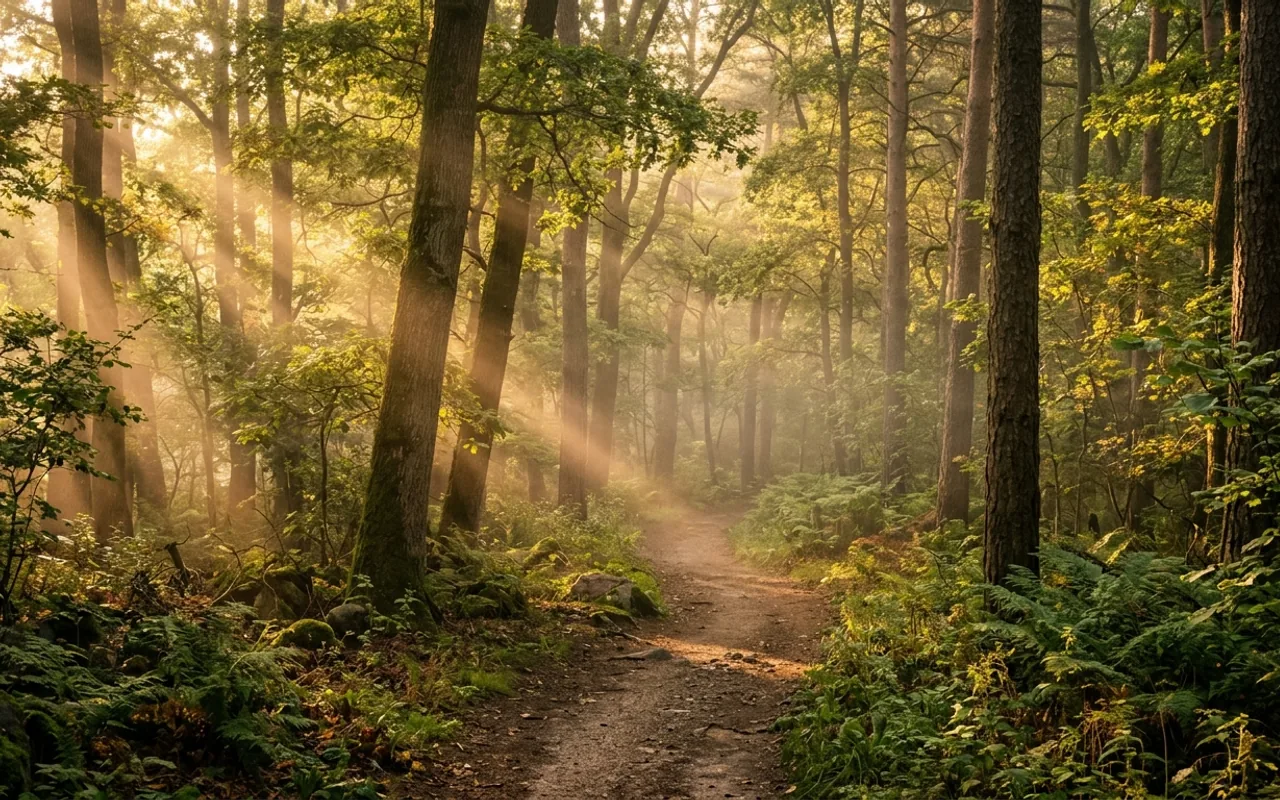
The view over the Heutal at the Beutenlay nature reserve is a delight. The valley stretches far through the woods. The Münsingen Heutal is special in every season. From the viewpoint, you have a wide view and can watch cyclists, hikers, or cross-country skiers on the trails in winter. Take a moment and enjoy the nature reserve in the tall grass.
From here, you have a great view over the Great Lauter Valley along the path. Take your time and enjoy the view! Hiking trails lead directly past the viewpoint, and the spot invites you to take a break. You can sit down in a blooming summer meadow and enjoy the view while listening to the hum of the many insects.
Blooming traditional orchard meadows, juniper heathlands tended by sheep, and lush green beech forests characterize the Swabian Alb and its foothills. A cultural landscape in the heart of Baden-Württemberg that is unique in the world and must be preserved for future generations. For this reason, the Swabian Alb Biosphere Reserve was designated by UNESCO in 2009. A landscape between the Albtrauf and the Danube Be out and about on one of the many certified hiking trails through varied landscapes, enjoy magnificent views from the Albtrauf over the Alb foothills, observe unique natural spectacles such as the blooming of spring snowflakes in Wolfstal, take a boat through Wimsener Cave, sample Albzarella, or admire the Arabian horse herd at Marbach Stud Farm – the biosphere reserve offers something of interest for families, active holidaymakers, and those seeking culinary pleasures. A bike tour through the Great Lauter Valley or across the former military training area near Münsingen, a visit to Europe’s largest Celtic city, the Heidengraben, to castles, palaces and ruins, followed by a stop at one of our restaurants – that is regional enjoyment. On a guided hike, with a good regional meal, a relaxing overnight stay, a cold beer or freshly baked bread – the more than 100 partners of the biosphere reserve are guided by considerate action, responsibility toward people and nature, and a forward-looking outlook. What is the Swabian Alb Biosphere Reserve? The Swabian Alb Biosphere Reserve is one of 142 National Natural Landscapes in Germany and, alongside the nature parks and th
The telescope gives visitors and locals the opportunity to take a closer look at and get to know different landscape views, and to provide brief information about the landscape features in an accessible way. By focusing attention, it draws the eye to the essential elements. Of the viewing telescopes available on the market, this model is the only one that offers labeling of a predefined panoramic section and can be rotated 360°. The labeling displays the names of the landscape features in the viewer’s field of vision. The model also includes a children’s platform, addressing an important target group in the biosphere reserve: families with children. The telescopes are available to users free of charge. A novel, purely mechanical technology makes it possible Who hasn’t experienced this at some point? You hike in the mountains, look at the map, and try to match the peaks with the names on the map — and fail miserably because the assignment simply won’t work. With the Viscope telescope, that is no longer a problem for hikers and holidaymakers, as a panorama with names and, if applicable, additional information is displayed when looking through the viewing telescope. Walkers will love this device, because it shows the beauty of the surroundings and gives them names. And it requires no electricity at all; it contains no electronics that could be damaged by moisture, cold, or sunlight. This is achieved through a novel, purely mechanical technology in which mountain and place names, path and field names, logos, and images are displayed precisely in the viewer’s field of vision.
The Münsingen local mountain, Beutenlay, invites you to go for a walk, linger and relax - it is freely accessible. At the appropriate time of year, enjoy the floral splendor of the gentian meadow or discover the scents of the juniper heath. The model demonstration of the three-field system gives you an insight into old agricultural cultivation techniques. The Beutenlay - about 100 hectares in size - is located on the southern edge of Münsingen and is one of the many characteristic pasture hills of the Münsingen Upland Alb, which lies at an altitude of 700 to 800 m. The best access points are at the Schützenhaus (continuing on from Wolfgartenstrasse) and at the Hopfenburg hiking car park on the B465 (towards Ehingen). The Beutenlay arboretum contains over 30 different tree species. A special feature is the field flora reserve, where the three-field system, proven over centuries on the Swabian Alb, is presented. The site includes a collection of shrub species, an arboretum, a spruce trial plot and numerous old grazing beeches in an intact juniper heath maintained by a shepherd. Because of its botanical uniqueness and species-rich fauna, the Beutenlay was awarded the Silver Plant of the German Nature Conservation Ring. Group tours with the Alb Guides are available by prior arrangement, but also on fixed dates. Further information can be found here in the current brochure.
The telescope gives visitors and locals the opportunity to take a closer look at and get to know different landscape views, and to provide brief information about the landscape features in an accessible way. By focusing the view, it draws attention to the essential elements. As the only one of the viewing telescopes available on the market, this model offers labeling of a predefined panoramic section and can be rotated 360°. The labeling displays the names of the landscape features in the viewer’s field of vision. The model also includes a children’s platform, thereby appealing to an important target group in the biosphere reserve: families with children. The telescopes are available to users free of charge. A novel, purely mechanical technology makes it possible Who hasn’t experienced this? You’re hiking in the mountains, looking at the map and trying to match the peaks with the names on the map—and failing miserably because the assignment simply won’t work. With the Viscope telescope, that is no longer a problem for hikers and holidaymakers, because a panorama with names and, where applicable, information is displayed when looking through the viewing telescope. Walkers will love this device, because it shows the beauty of the surroundings and gives them names. And it requires no electricity at all; it contains no electronics that could be damaged by moisture, cold, or sunlight. This is achieved through a novel, purely mechanical technology in which mountain and place names, path and field names, logos, and images are displayed precisely in the viewer’s field of vision.
The water reservoir lies high above the Trailfingen district of Münsingen and offers a wonderful view over the Swabian Alb. The viewpoint invites you to take a short rest or have a picnic. From there, you can enjoy the view over Münsingen-Trailfingen.
A viewpoint in the Great Lauter Valley near Münsingen, from which you have a great view over the valley and the village as well as Bichishausen Castle - the perfect picnic spot on a hike. Above the village of Gundelfingen in the Great Lauter Valley is the Bürzel viewpoint. Very nearby is the Steighof hiking car park. The view from there stretches far across the Great Lauter Valley and Niedergundelfingen Castle. Hohengundelfingen Castle peeks out from the forest. Two benches offer a place to take a break. Hiking trails: hochgehbürzelt
The Bichishausen Castle Ruins tower on a small hill in the Great Lauter Valley. They are easy to reach on foot and open to the public free of charge. The very well-preserved and structurally secured complex from the 13th to 16th centuries is a fine example of a shield-wall castle from the late Middle Ages. Such an especially high and strong wall protected this castle, belonging to a branch of the Lords of Gundelfingen, on the mountain side. During restoration work carried out by the Reutlingen district in 1973/74, the remains of a high-quality rusticated ashlar keep from the Staufer period were also uncovered. The site can be reached comfortably in just a few minutes on foot from the village. An information board explains the history of the freely accessible fortress, which is first mentioned in written sources in 1296. In the Baroque parish church of Bichishausen, St. Gallus, the epitaph with the heraldic ancestral proof of the last lord of the castle and his wife has been preserved: Heinrich Treisch von Buttlar, once an imperial councillor and participant in the Turkish Wars, found his final resting place in the quiet Lauter Valley in 1541. His wife Anna, née Truchsessin von Ringingen, died in 1545. The castle then passed by inheritance to the House of Fürstenberg. Its colors, blue-white-red, together with Württemberg's black-yellow, now adorn the bus shelter on Lautertalstraße, which thus recalls the old state border and has nothing to do with France, as one might think! Hiking trails: high-altitude boundary trail Cycling tours: Berg-Bier Tour, Tour 4, Tour 6, Tour
The Jewish Museum explores the history of the Jewish community of Buttenhausen in Münsingen up to its end during the Nazi era. Comprehensive information and audio guides offer a vivid insight into the lives, feelings, and culture of the former Jewish residents through narrated contemporary eyewitness accounts, press reports, and stories. Buttenhausen was one of the few Jewish rural communities in southern Württemberg. In 1787, Buttenhausen’s then local lord, Philipp Friedrich von Liebenstein, issued a letter of protection for Jews, which allowed 25 Jewish families to settle there. The history of the Jewish community up to its end during the Nazi era is presented in the Jewish Museum, newly redesigned in 2013. Located on the first floor of the former Bernheimer Secondary School, the exhibition examines in five rooms the circumstances surrounding the settlement of the first Jews in the village, Württemberg’s emancipation of the Jews in the 19th century, religion and communal institutions, Jewish-Christian coexistence in Buttenhausen, Jewish influences on political and cultural life, trade and schooling, as well as the developments during the Nazi era that led to the destruction of the Jewish community. The history of coming to terms with the past up to the present day is also a theme. The museum is open from the beginning of April to the end of October on Sundays and public holidays, as well as by request.
The so-called “Old Castle,” built around 1485 above the town of the time by the Counts of Württemberg and used for a time as a granary, now houses the Münsingen Town Museum on the second floor, with an exhibition on the history and culture of the Münsingen Alb. The former local history museum of the town can now look back on a history of more than 100 years. Beginning with the founding of an antiquities collection by the Münsingen merchant Carl Schoell in 1912, the museum has always presented itself in a style that changed with the times. In 2009, on the occasion of Münsingen’s 1,200th anniversary, it was fundamentally modernized and redesigned. Visitors can expect an impressive presentation of the history of Münsingen and its districts as well as the cultural history of the Münsingen Alb. The main themes are archaeology and urban development, evidence of bourgeois culture and urban crafts, peasant culture, and religion and customs. A central focus is the historically significant “Münsingen Treaty,” whose signing in Münsingen on December 14, 1482 overcame the existing division of Württemberg. A museum film provides information about the significance of the treaty. Opening hours year-round: Thursdays, Sundays and public holidays 1:00 p.m. - 5:00 p.m.
A sweeping panoramic view over the Swabian Alb. In good weather, even as far as the Alps. A sign with places and sights is located there.
The telescope gives visitors and locals the opportunity to take a closer look at and get to know different landscape views, and to provide concise information about the landscape features in an accessible way. By focusing the view, it draws attention to the essential elements. Of the panoramic telescopes available on the market, this model is the only one that offers labeling of a predefined section of the panorama and can be rotated 360°. The labeling displays the names of the landscape features in the viewer’s field of vision. The model also includes a children’s platform, addressing an important target group in the biosphere reserve: families with children. The telescopes are available to users free of charge. A novel, purely mechanical technology makes it possible Who hasn’t experienced this at some point? You’re hiking in the mountains, looking at the map and trying to match the peaks with the names on the map — and failing miserably because the assignment just won’t work. With the Viscope telescope, that is no longer a problem for hikers and holidaymakers, because a panorama with names and, where applicable, additional information is displayed when looking through the viewing telescope. Walkers will love this device, because it shows the beauty of the surroundings and gives it names. And it requires no electricity at all; it contains no electronics that could be damaged by moisture, cold or sunlight. This is made possible by a novel, purely mechanical technology in which mountain and place names, path and field names, logos and images are displayed precisely in the
The Münsingen outdoor pool is considered one of the most beautiful outdoor pools on the Alb plateau because of its location and design. The Münsingen outdoor pool was reopened in 2019. Following a comprehensive modernization, including the construction of a new changing building, a family changing building, the redesign of the pools, and the redesign of the entire outdoor area, visitors from near and far can now enjoy a state-of-the-art pool. The varied range of facilities offers relaxation for water lovers, sunbathers, and swimming enthusiasts of all ages alike. At the Münsingen terrace outdoor pool, you can experience a lot: a large pool slide children's pool children's playground and water playground sandpit sunbathing lawns barbecue area with hut small kitchen for meals mini golf volleyball court kiosk
At the Münsingen Herb Trail, everything revolves around medicinal and culinary herbs and how they can be used. The Swabian plant world can be discovered through information panels or on a guided tour. As far back as writings from Egypt and other early advanced civilizations more than 5,000 years old, the great importance of plants for healing human ailments is mentioned. The roughly 4,000-year-old writings of traditional Chinese medicine also show us today how important the study of medicinal plants was and is. Plants have always grown in the human environment, whether as food or as remedies: much has been cultivated and bred over the millennia. Modern medicine, by contrast, is only a few centuries old. It can therefore be assumed that humanity has always used plants and herbs as food, but also as remedies. People have tried many things in order to cure illnesses. In some cases, they also copied animals. After all, success did not always come immediately, and some “experiment” was certainly also associated with a fatal outcome. In Europe, the use of medicinal and culinary plants was also important, but unfortunately much knowledge has been lost. Quite a few writings fell victim, for example, to the witch burnings. Fortunately, important traditions such as the writings of Hildegard of Bingen and Paracelsus have survived the generations. Likewise, the instructions and descriptions of old monks and nuns, such as those of Walahfried Strabo, who was abbot on the island of Reichenau around 809, have been preserved. And there are also traditions from the Celts who once lived in
At Living Museum Alb, the first Living Museum in Germany, you can watch artists at work in numerous studios. At the same time, you have the opportunity to visit exhibitions and events during opening hours. If you would like to be artistically active yourself, this inspiring place also offers studios for rent. Living Museum Alb in Münsingen-Buttenhausen is an inclusive place, a place for participation and encounter: its diverse rooms are dedicated to painting, drawing and three-dimensional design, theatre and performance, music and poetry. Artists work with language, colors, sound and expression. Authentic art is created on several floors and presented in changing exhibitions and at events. The world’s first Living Museum was founded in 1983 in the USA by psychologist and artist Dr. Janos Marton and artist Bolek Greczynski. Today, Living Museums exist in the Netherlands, Switzerland and Korea, and with Living Museum Alb now also in Germany. The idea is to combine an art museum and a studio. Exhibition spaces for temporary exhibitions by a wide variety of artists and open studios from different artistic disciplines come together under one roof and are open to visitors. People with and without disabilities work together freely as artists and/or side by side. At Living Museum Alb, works of art are permanently on display and changing exhibitions are shown.
Discover 21 leisure activities, outdoor spots, sports, museums, and workshops in Münsingen for today or this weekend. Current highlights include Viewing Pavilion, Schachenberg View, Hohenhundersingen Castle Ruin.
Explore 21 leisure activities across outdoors, sports, exhibitions, workshops, and cinema in Münsingen, such as Viewing Pavilion, Schachenberg View, Hohenhundersingen Castle Ruin.
Open our places and attractions guide at /en/cities/Münsingen/poi for opening hours and addresses.
Yes, visit /en/cities/Münsingen/kinder for curated kid-friendly outings and family workshops.