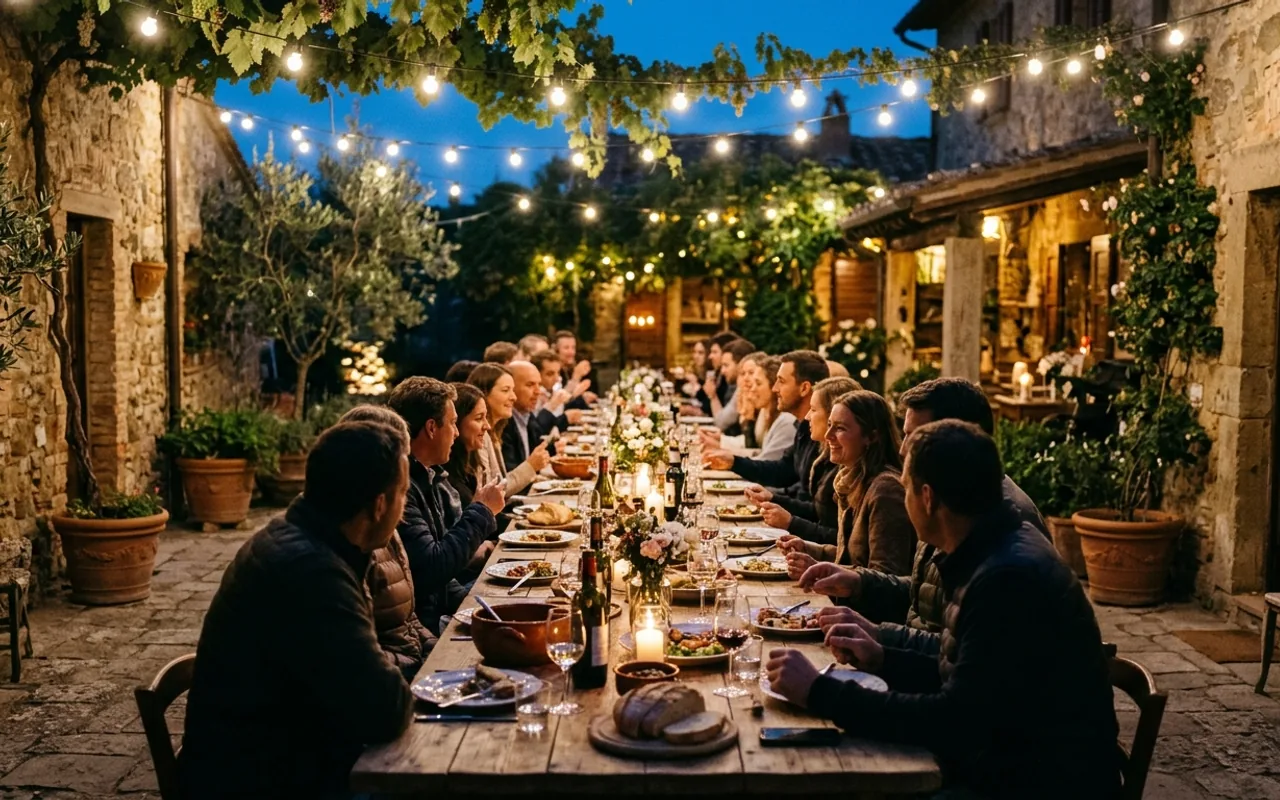
Discover concerts, nightlife, dining, culture and events in Stammham.
Building History: The oldest part of the church is the Gothic lower sections of the tower with the chancel. Incorporating these structural elements, a new tower was built in 1701/02. The architect and master builder of the Baroque nave, built in 1740, was the Ingolstadt master mason Michael Anton Prunthaller. The present characteristic tower top was created by the chamber master mason Joseph Deiglmayer in 1798, after lightning destroyed the dome. Description: When entering the new building, the glass windows designed by Prof. Peter Recker from Eichstätt on the western and eastern gables are impressive, as is the well-structured wooden ceiling. Through the altar island at the junction between the old and new building, one enters the old church, which has retained its Baroque character in the nave and even partly its Gothic character in the chancel. In addition to the Gothic rib vault, a Gothic sacrament niche and a pointed-arch door have survived on the left side of the chancel. Much of the furnishings of the Gothic church has also been preserved: the figures of the high altar, St. Stephen in the center, St. Lawrence on the right and St. George on the left, all fine works from around 1510, and the massive baptismal font to the right in front of the chancel arch. The high altar itself is a Baroque creation delivered by Ingolstadt craftsmen in 1677, with Bartholomäus Sedlmair carrying out the sculptural work, especially God the Father in the superstructure and the angels. The oval paintings of St. Francis Xavier and St. Ignatius in precious Rococo frames above the p
The village of Westerhofen is first mentioned in documents in 1302. The knight Bartholomäus Marendl (died 1571) and his wife Susanne, née Stinglhamer zu Thürthenning (died 1576), whose grave slab can be seen at the parish church of Stammham, are regarded as the builders of the manor house. Between 1585 and 1598, the estate passed to the administrator of Stammham-Etting, Paul Garzweiler, to whom lower jurisdiction was transferred in 1604 by concession of the territorial prince. In 1692, the Garzweiler family sold the manor to the tax collector of Ingolstadt and lord of the manor of Schönbrunn, Johann Jakob Prugg, who had the castle, which had burned down in the Thirty Years' War, rebuilt in its present form. The new owner of the castle was an extraordinary personality: he had taken part in the Turkish Wars in Hungary, was ennobled in 1693, was married three times to noble ladies, and was stabbed to death with a sword in 1703 in front of the Franciscan church in Ingolstadt by a building commissioner. For the underage heirs, a feudal representative appointed by the Elector, the Munich mayor and chief city judge Maximilian Joseph Vauhier, exercised jurisdiction until 1727. Through the marriage of Anna Maria von Prugg, the manor came into the possession of the Schmid family of Kleinaigen and Schachten, who were ennobled in 1761. The last lord of the castle was Franz von Schmid from 1808. In 1823, the manor was dissolved; the castle first came into state ownership and later into private hands.
Discover 2 curated Community & Social events and highlights in Stammham on Viventii with times, venues, and tickets. Current highlights include Catholic Church of St. Stephen Stammham, Westerhofen Castle.
Viventii currently lists 2 public events, concerts, parties, cultural happenings, and local spots in Stammham, including Catholic Church of St. Stephen Stammham, Westerhofen Castle.
Use Viventii's curated Today, Tonight, Weekend, This Week, Leisure, and Places guides for Stammham.
Yes, browse free admission events at /en/cities/Stammham/free and 0% fee tickets at /en/cities/Stammham/tickets.