Discover concerts, nightlife, dining, culture and events in Twist.
<div>Where after the last ice age (approx. 10,000 BC) water flooded meadows and valleys in abundance, the water prevented the decomposition of plant material, resulting in the development of fens. If these layers of undecomposed organic material grew out of the groundwater-influenced area, raised bogs were formed when there was sufficient rainfall. This is how the largest contiguous moorland area in Central Europe, the Bourtanger Moor, came into being. The Bargerveen Natura 2000 site was originally part of the middle Bourtanger Moor. Originally, the Bourtanger Moor covered an original area of approx. 1200 km², of which 1/3 is on the Dutch side and 2/3 on the German side. </div><div>From the 17th century onwards, the Dutch, starting from Groningen, practiced intensive cultivation with the so-called "Fehnkultur". Drainage ditches were dug into the raised bog to channel the water into navigable receiving waters. The extracted black peat (highly decomposed peat) was transported away by ship as burnt peat, while the loose white peat (slightly decomposed peat) was left on site. On the return journey from the cities, the ships took silt from the rivers with them, which was mixed with the white peat in the moor. In this way, the moors were converted into agricultural land and made usable accordingly. <br><br></div><div>Peat extraction in the Bargerveen began at the end of the 19th century. As early as the 1960s, the decision was made to revitalize the raised bog after the end of extraction. To keep the water in the area, dams were built and ditches were closed for this p
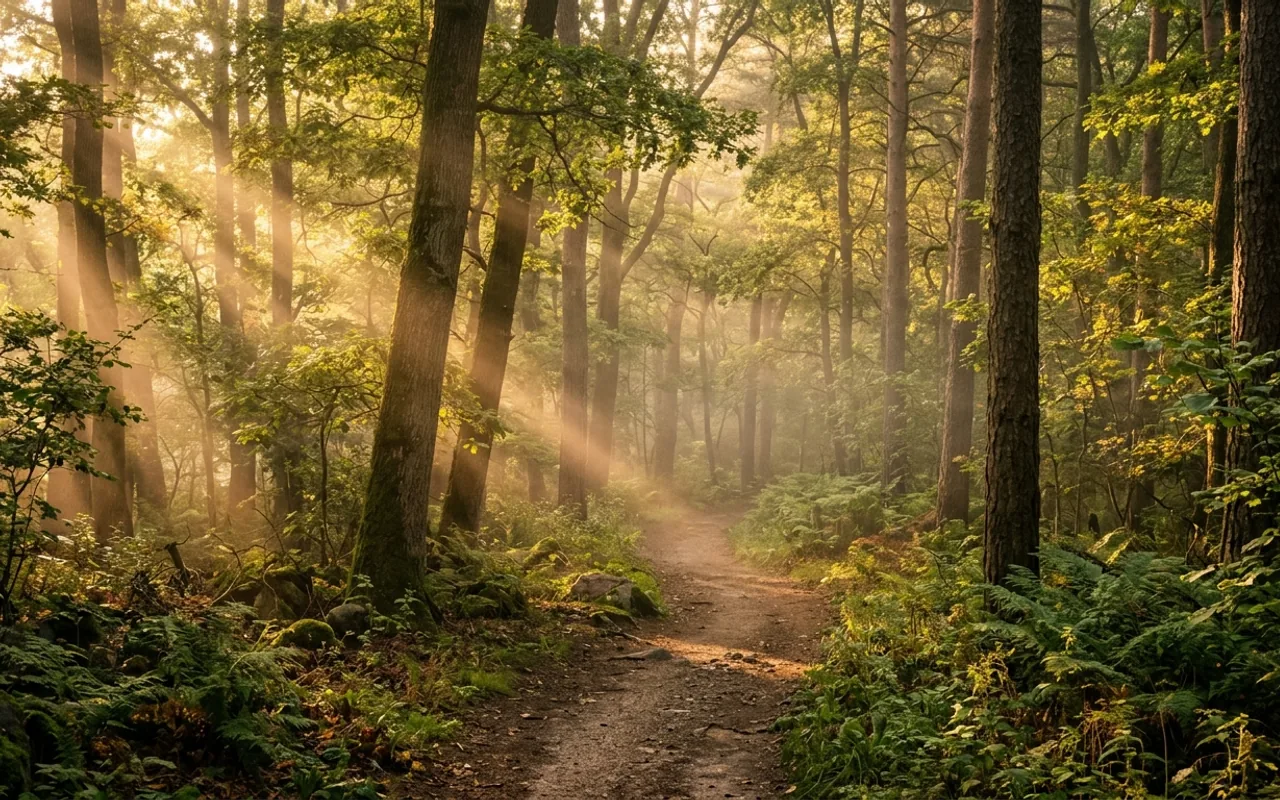
The Fullen Forest is a test site for over twenty native and non-native tree species. The Fullen Forest now covers 285 hectares. A total of 1.3 million trees were sown and planted here between 1980 and 1995 on peat-covered and deep-ploughed areas.<p></p><p>The mixed forest fulfills important forest functions today. Its value as a habitat for animals and plants, as a recreational landscape and for timber utilization will continue to increase in the coming decades. In addition to the 19 km of inner and outer forest edges, ponds, meadows, wetlands and other open-air biotopes also provide special habitats for animals.</p><p>On the forest adventure trails - the Fullen Forest Trail and the Fullen Moorland Trail - you can find out everything you ever wanted to know about this special habitat in the interplay between moorland and forest.</p><p><strong>Fullener Moorweg</strong> (Lange Straße in 49767 Twist, 2.5 km)<br>A former peat extraction area is only slowly growing into a forest. In the Fullen Forest, some of the peat-covered areas are left to develop naturally. Pioneer plants and tree species create the conditions for natural forestation (succession). The district forester ensures that a mixed forest develops here in the long term, undisturbed by harmful influences, and that flora and fauna can flourish.
Discover 2 curated Nature & Outdoor events and highlights in Twist on Viventii with times, venues, and tickets. Current highlights include Vogelbeobachtungsturm am Bargerveen, Walderlebnispfad Fullener Moorweg.
Viventii currently lists 2 public events, concerts, parties, cultural happenings, and local spots in Twist, including Vogelbeobachtungsturm am Bargerveen, Walderlebnispfad Fullener Moorweg.
Use Viventii's curated Today, Tonight, Weekend, This Week, Leisure, and Places guides for Twist.
Yes, browse free admission events at /en/cities/Twist/free and 0% fee tickets at /en/cities/Twist/tickets.