Discover concerts, nightlife, dining, culture and events in Bayreuth.
The poet Jean Paul (Johann Paul Friedrich Richter), next to Richard Wagner "the master of Bayreuth", lived in this city from 1804 until his death in 1825. The museum is based on the Jean Paul collection of the Bayreuth doctor Dr. Philipp Hausser. In three large rooms, visitors will find first editions of the poet's works, literature from his circle, portraits, other visual material and memorabilia.
On display are, among other things: some of the most valuable and beautiful portraits of Liszt, a diary of the young Liszt, the Ibach grand piano from the hall of the House Wahnfried, Liszt's silent piano, a life mask and a death mask, handwritten letters, including two characteristic pairs of letters from the correspondence with Richard Wagner, rare first editions of works, and much more.
The Franz Liszt Museum is now located in the artist's death house, in the immediate vicinity of Haus Wahnfried, the home of his son-in-law Richard Wagner. The exhibition consists mainly of the Liszt collection of the Munich pianist Ernst Burger, acquired by the city in 1988. It consists of portraits and documents on his life and work, as well as manuscripts and objects from Liszt's personal possession. Visitors can listen to music by Franz Liszt on request.
The museum houses what is probably the most significant private collection on Jean Paul, donated by Dr. Philipp Hausser. In 1980, the museum was established under the direction of its director, Dr. Manfred Eger. In 1994, the city of Bayreuth was able to significantly expand it and has since acquired further valuable manuscripts by Jean Paul as well as documents relating to his life and work. In the Jean Paul anniversary year of 2013, on the 250th birthday of the poet, it was reconceived and redesigned by Dr. Frank Piontek and exhibition designer Florian Raff under the direction of Dr. Sven Friedrich. The museum is housed in the former residence of Richard Wagner's daughter Eva and her husband Houston Stewart Chamberlain (...) Guided tours are available by prior telephone arrangement.
What did a performance smell like in the 18th century? What sounds filled the theatre? The illusionistic world of baroque theatre comes to life again in the opera house exhibition. What does it feel like to stand on a baroque stage? Who worked in front of and behind the scenes? How did the stage set changes work "by magic", how did special effects work? Trying things out is expressly permitted here! A true-to-scale, functional stage reconstruction is available for this purpose.
The Archaeological Museum is located in the rooms of the Italian Building of the New Palace, which was built between 1759 and 1762. It invites you on a journey through 100,000 years of human history in the region and exclusively displays original finds from Upper Franconia - from the hand axe of the Neanderthal of the Palaeolithic to the bronze writing stylus of a scribe of the Middle Ages. Highlights of the collection are Neolithic battle axes, more than 80 clay vessels from the Hallstatt period, high-quality bronze jewellery in the sculptural style of the early Celts and costume accessories as well as ornamental fittings from the Middle Ages. A "hands-on archaeology" section rounds off the exhibition.
The head of a giant seismosaurus protrudes curiously through the wall of the house and greets visitors to the Prehistoric World Museum. His comrades, up to 15 m high, cavort in the garden. In exciting sections such as the "Dragon's Cellar" or the "Bear's Cave", knowledge about fossils, crystals and rocks is imparted, and touching is allowed in many places. Walk-through crystals, plants from a primeval jungle and countless animals such as fish dinosaurs, crocodiles and ammonites guide visitors through millions of years of geological history in Upper Franconia.
On the occasion of the 125th anniversary of the Graser School in 2000, a museum was set up on the ground floor of the school building about the life and work of Johann Baptist Graser, a pedagogue who lived in Bayreuth from 1810 until his death in 1841. In addition to commemorating this important reformer of the Upper Franconian school system, the museum also offers illustrative material on school conditions in earlier times.
The Historical Museum, founded in 1894, is the oldest museum in the city of Bayreuth and has been located in the Old Latin School on Kirchplatz, in the immediate vicinity of the city church, since 1996. Its diverse collection documents the cultural and artistic history of the festival city and its region from the Middle Ages to the present day. Spread over three floors, the museum provides an insight into all key aspects of the town's development, with a focus on Bayreuth's time as a margravial residence town in the 17th and 18th centuries. The private collection of Dr. Otto Burkhardt, which is on permanent loan to the Historical Museum, forms a separate section. This is probably the world's most extensive collection of "Bayreuth faience" from the St. Georgen manufactory founded in 1715. The numerous exhibits in the permanent exhibition are complemented and enhanced by regular special exhibitions, events and an intergenerational educational program.
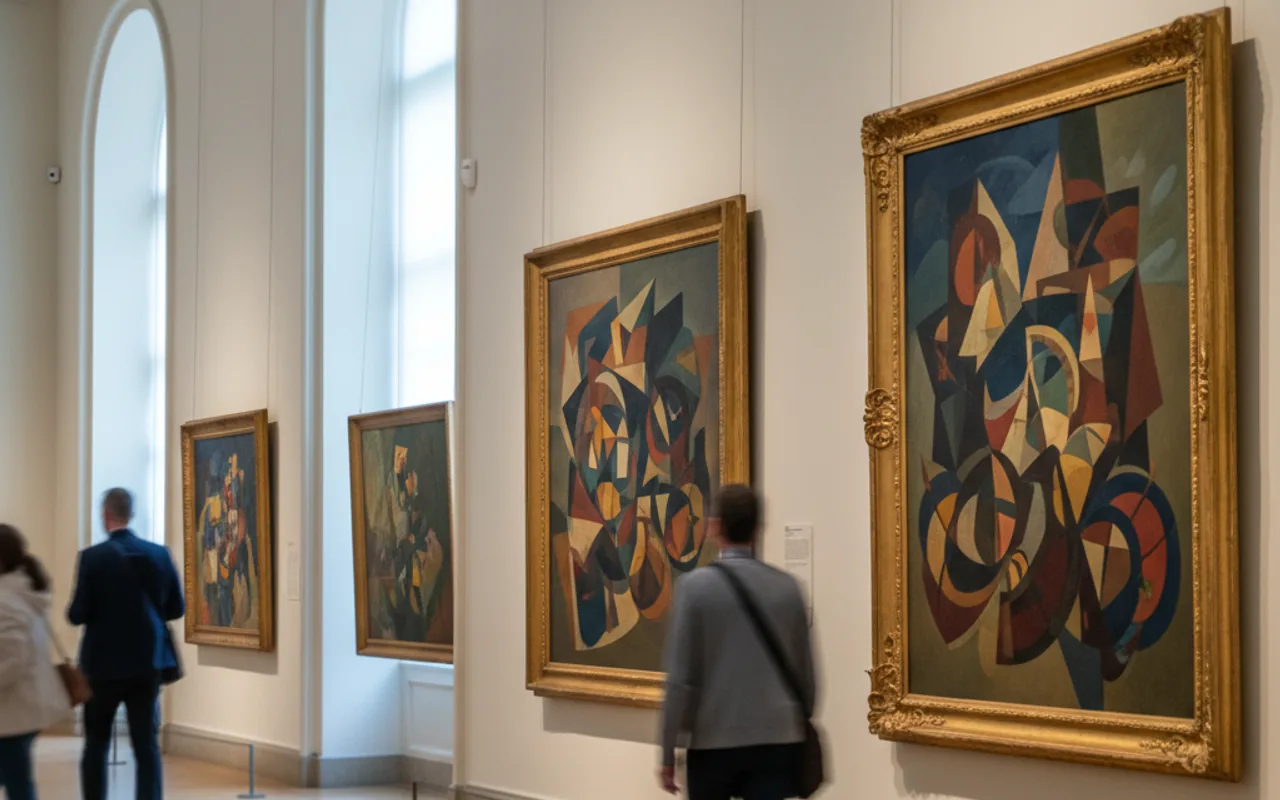
The focus of the collections at the Bayreuth Art Museum is on 20th century art. Works on paper from various art movements are represented: including the "Brücke" (Heckel, Kirchner, Müller, Pechstein, Schmidt-Rottluff), New Objectivity (Beckmann, Dix, Hubbuch) and art after 1945 (Antes, Ackermann, Gomringer, Hrdlicka, Koch, Reuterswärd, Nay). A further focus is so-called Outsider Art (Art brut). Different themes from the collections are presented in changing exhibitions. The museum was initiated and expanded by private art foundations. The art museum also houses the Bayreuth Poster Museum with around 18,000 posters.
The natural history museum of the Landesbund für Vogelschutz in the Lindenhof shows the characteristic habitats of northern Bavaria with their typical flora and fauna. Starting from the original forest, it illustrates how man has changed the landscape over the centuries. In addition to landscape-ecological contexts, nature conservation and species protection goals are also presented. In the children's museum, nature can be experienced up close under the motto "Experience and understand the forest". A climbing tree, a badger's burrow, an animal voice telephone and the animals of the forest invite visitors to explore nature. In spring, birds can be observed live raising their young via four nesting box cameras.
Joachim Schultz has been showing changing exhibitions on literature and art here since 2013.
Visitors to the Maisel Brewery's Beer Experience World can see how the craft of brewing has evolved over the course of four generations. Past steam engines and copper kettles, the tour leads from the brewhouse through the hop chamber and the old cooling system to a modern brewing workshop. In addition, the 19th century brewery building houses an extensive collection of beer glasses and mugs, enamel signs and beer mats.
On 50 m² of exhibition space, you can experience a special part of the city's history on the top floor of the Bayreuth fire station: The museum of the Bayreuther FeuerwehrMuseum e. V. (Bayreuth Fire Brigade Museum e. V.) primarily shows Bayreuth's fire brigade history here with changing focal themes.
The Museum of peasant tools is housed in the barn of the "Lettenhof" barn, built in 1745, with its collection of old farming and domestic tools. Currently on display are various implements for tilling the fields, numerous carts and carriages and tractors, as well as equipment for preparing food in the kitchen and preserving food in the domestic departments. The museum also has a working göpel (a rotary drive moved with the help of a horse) and its own blacksmith's shop. The cultural service centre of the Upper Franconian district is also housed on the museum grounds.
Discover 15 curated Exhibitions & Museums events and highlights in Bayreuth on Viventii with times, venues, and tickets. Current highlights include Jean-Paul-Museum der Stadt Bayreuth (Jean Paul Museum of the City of Bayreuth), Franz Liszt Museum Bayreuth, Franz-Liszt-Museum der Stadt Bayreuth (Franz Liszt Museum of the City of Bayreuth).
Viventii currently lists 15 public events, concerts, parties, cultural happenings, and local spots in Bayreuth, including Jean-Paul-Museum der Stadt Bayreuth (Jean Paul Museum of the City of Bayreuth), Franz Liszt Museum Bayreuth, Franz-Liszt-Museum der Stadt Bayreuth (Franz Liszt Museum of the City of Bayreuth).
Use Viventii's curated Today, Tonight, Weekend, This Week, Leisure, and Places guides for Bayreuth.
Yes, browse free admission events at /en/cities/Bayreuth/free and 0% fee tickets at /en/cities/Bayreuth/tickets.