Discover concerts, nightlife, dining, culture and events in Bayreuth.
The Museum of peasant tools is housed in the barn of the "Lettenhof" barn, built in 1745, with its collection of old farming and domestic tools. Currently on display are various implements for tilling the fields, numerous carts and carriages and tractors, as well as equipment for preparing food in the kitchen and preserving food in the domestic departments. The museum also has a working göpel (a rotary drive moved with the help of a horse) and its own blacksmith's shop. The cultural service centre of the Upper Franconian district is also housed on the museum grounds.
What, actually, connects the Egyptians with Bayreuth? How did the Bayreuth rock cellars come into being? Why was there a cellar community beneath the city? All these questions, and many more, are answered on a tour through the Bayreuth Catacombs. The concept of the experience tour has been further developed both in terms of content and in its sequence, and gives visitors a fascinating insight into Bayreuth’s city and beer history and into the varied use of the cellar facilities over the past centuries. From the creation of the extensive network of passages, to the importance of the rock cellars for communal and basin brewing in Bayreuth, to the role of the facilities in the Second World War, the experienced tour guides have many a quirky story at hand and give guests an insight into the underground realm with its special charm and mysterious atmosphere. Visitors also learn what significance the catacombs had in the history of Bayreuth beer brewing and Bayreuth’s largest beer garden, the Herzogkeller. The important connection between the Herzogkeller, the brewery and the underground rock cellars will in future be emphasized by the fact that the new starting and ending point of the catacombs tour is the Bayreuth Herzogkeller (Hindenburgstraße 9). Here, for visitors, the circle closes around the history of beer brewing, and after the tour they have the opportunity to convince themselves of the quality of Bayreuth beers and Upper Franconian beer-garden specialties at Bayreuth’s only beer cellar. Catacombs tour: The catacombs can only be visited as part of guided t
The city of Bayreuth has set up a memorial in the birthplace of the social democrat, trade unionist and resistance fighter Wilhelm Leuschner (1890-1944), who was executed in the course of the persecution of the assassins of 20 July 1944. The individual stages of Leuschner's life are presented in four rooms with documents, photos and personal objects. A short film about his fight against National Socialism from 1933 to his execution in 1944 was filmed at original locations especially for the memorial and supplemented with original film passages.
On the occasion of the 125th anniversary of the Graser School in 2000, a museum was set up on the ground floor of the school building about the life and work of Johann Baptist Graser, a pedagogue who lived in Bayreuth from 1810 until his death in 1841. In addition to commemorating this important reformer of the Upper Franconian school system, the museum also offers illustrative material on school conditions in earlier times.
The Iwalewahaus (Iwalewa House) is a place for the production and presentation of discourse-oriented contemporary art. Through exhibitions, university research and teaching, collections, archives, artist residencies and events, the latest developments in contemporary African culture are presented and actively developed in collaborations with artists and institutions.
## Bayreuth Giant Beer has been brewed at the brewery since 1852; Glenk Bräu was then one of the first private breweries, whereas otherwise there were almost exclusively communal breweries in the area. Since 2016, brewing has once again taken place in the brewery’s own newly built brewhouse, and in the integrated Glenk Corner you can sample and enjoy Glenk beers. A Valkyrie, also called a battle maiden or shield maiden, is, in Norse mythology, a female spirit being from the retinue of the god Odin. Why mention this here of all places? Because one such figure adorns the artistic label of the “Walkürentrunk,” and because this pale lager, with its mild maltiness, floral hops and subtle nuttiness, is extremely tasty. Anyone in Wagner City should pack this beer as a souvenir! The Glenk Garden has room for 500 guests. Linden trees, chestnut trees and a large children’s playground still complete one of the city’s oldest beer gardens, which was brought back to life by Eckard Hentes. Since 2023, it has been leased by the Greek restaurant “Kreta".
On 50 m² of exhibition space, you can experience a special part of the city's history on the top floor of the Bayreuth fire station: The museum of the Bayreuther FeuerwehrMuseum e. V. (Bayreuth Fire Brigade Museum e. V.) primarily shows Bayreuth's fire brigade history here with changing focal themes.
## Franconian Brewing Tradition for Over 150 Years Bayreuther Bierbrauerei AG has stood for over 150 years of craft-brewed beer specialties that have a long tradition in Franconia. The brewery began operations in 1857 on the Herzog, the hill at the entrance to Bayreuth, and quickly became a landmark of the city. With a total of two Franconian specialties in swing-top bottles, Bayreuther Bierbrauerei brings its Franconian brewing artistry to life for connoisseurs. In addition to AKTIEN Zwick’l Kellerbier, the Bayreuth brewers brew AKTIEN Landbier, a typically Franconian dark beer. With the long-established BAYREUTHER BRAUHAUS brand, Bayreuther Bierbrauerei also stands for lived Bavarian brewing craftsmanship.
The Historical Museum, founded in 1894, is the oldest museum in the city of Bayreuth and has been located in the Old Latin School on Kirchplatz, in the immediate vicinity of the city church, since 1996. Its diverse collection documents the cultural and artistic history of the festival city and its region from the Middle Ages to the present day. Spread over three floors, the museum provides an insight into all key aspects of the town's development, with a focus on Bayreuth's time as a margravial residence town in the 17th and 18th centuries. The private collection of Dr. Otto Burkhardt, which is on permanent loan to the Historical Museum, forms a separate section. This is probably the world's most extensive collection of "Bayreuth faience" from the St. Georgen manufactory founded in 1715. The numerous exhibits in the permanent exhibition are complemented and enhanced by regular special exhibitions, events and an intergenerational educational program.
Joachim Schultz has been showing changing exhibitions on literature and art here since 2013.
The poet Jean Paul (Johann Paul Friedrich Richter), next to Richard Wagner "the master of Bayreuth", lived in this city from 1804 until his death in 1825. The museum is based on the Jean Paul collection of the Bayreuth doctor Dr. Philipp Hausser. In three large rooms, visitors will find first editions of the poet's works, literature from his circle, portraits, other visual material and memorabilia.
Wilhelminenaue Generations Park offers numerous play, sports, fun, and relaxation options for young and old alike.
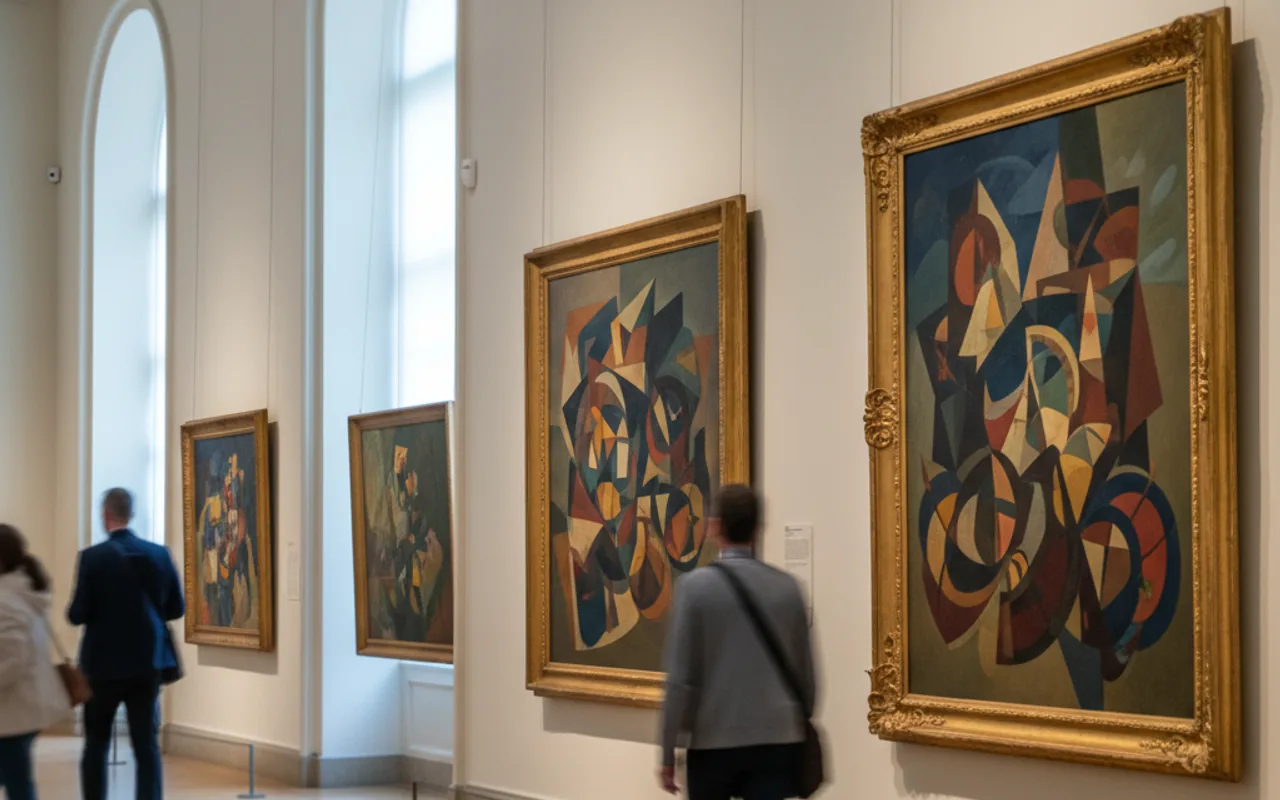
The focus of the collections at the Bayreuth Art Museum is on 20th century art. Works on paper from various art movements are represented: including the "Brücke" (Heckel, Kirchner, Müller, Pechstein, Schmidt-Rottluff), New Objectivity (Beckmann, Dix, Hubbuch) and art after 1945 (Antes, Ackermann, Gomringer, Hrdlicka, Koch, Reuterswärd, Nay). A further focus is so-called Outsider Art (Art brut). Different themes from the collections are presented in changing exhibitions. The museum was initiated and expanded by private art foundations. The art museum also houses the Bayreuth Poster Museum with around 18,000 posters.
## The Smallest Brewery in Aufseß ### Caves and Castles of the Franconian Switzerland. The Brewery Trail through the "World Record Municipality" of Aufseß (14 km). Dipl.-Pädagoge and brewer Martin Schuster knows his craft. As part of the world record municipality of Aufseß, he and his wife Gundi have continued the tradition of the brewery founded in 1884 since 1987. Beer is still brewed here in a wonderfully traditional way, with wood firing, belt drive, and gears. It is not exactly romantic, though, but rather genuine, hard manual labor for the brewing couple. A highlight for the two was their participation in the feature film "Beerland," which was released in cinemas in 2013 and is still available on YouTube today. If beer lovers happen to pass by on a brewing day, they are welcome to take a look inside the brewhouse and may even get a Seidla. You can also get one at the brewery inn with landlord Jens Bischoff in Sachsendorf. There you can also soak up the original and rustic atmosphere, and enjoy the amber-colored country beer as well as the selection of food, ranging from snacks to changing hot regional specialties. By the way: bikers are warmly welcome here.
On display are, among other things: some of the most valuable and beautiful portraits of Liszt, a diary of the young Liszt, the Ibach grand piano from the hall of the House Wahnfried, Liszt's silent piano, a life mask and a death mask, handwritten letters, including two characteristic pairs of letters from the correspondence with Richard Wagner, rare first editions of works, and much more.
The Eremitage, a historic park created in 1715 just outside the gates of the city of Bayreuth, houses the Old Palace with the Inner Grotto and water features. The grounds also include the New Palace with orangery and the central Sun Temple, crowned by Apollo—the god of the Muses. The park lies on a hill on the eastern edge of the Bayreuth valley basin, directly adjacent to the district of Sankt Johannis. To the east and north it is bordered by the steeply cut valley of the Red Main, while to the south it adjoins the district of Eremitenhof. Guided tours: daily every 45 minutes (duration: approx. 60 minutes) April to September from 9:00 a.m. (last tour at 5:15 p.m.) October 1 to 16 from 10:00 a.m. (last tour at 3:15 p.m.) Water features: from May to mid-October (hourly) Large Basin: 12:00 to 5:00 p.m. Lower Grotto: 12:15 to 5:15 p.m. Dogs are allowed, but must be kept on a leash.
The Archaeological Museum is located in the rooms of the Italian Building of the New Palace, which was built between 1759 and 1762. It invites you on a journey through 100,000 years of human history in the region and exclusively displays original finds from Upper Franconia - from the hand axe of the Neanderthal of the Palaeolithic to the bronze writing stylus of a scribe of the Middle Ages. Highlights of the collection are Neolithic battle axes, more than 80 clay vessels from the Hallstatt period, high-quality bronze jewellery in the sculptural style of the early Celts and costume accessories as well as ornamental fittings from the Middle Ages. A "hands-on archaeology" section rounds off the exhibition.
The Franz Liszt Museum is now located in the artist's death house, in the immediate vicinity of Haus Wahnfried, the home of his son-in-law Richard Wagner. The exhibition consists mainly of the Liszt collection of the Munich pianist Ernst Burger, acquired by the city in 1988. It consists of portraits and documents on his life and work, as well as manuscripts and objects from Liszt's personal possession. Visitors can listen to music by Franz Liszt on request.
The natural history museum of the Landesbund für Vogelschutz in the Lindenhof shows the characteristic habitats of northern Bavaria with their typical flora and fauna. Starting from the original forest, it illustrates how man has changed the landscape over the centuries. In addition to landscape-ecological contexts, nature conservation and species protection goals are also presented. In the children's museum, nature can be experienced up close under the motto "Experience and understand the forest". A climbing tree, a badger's burrow, an animal voice telephone and the animals of the forest invite visitors to explore nature. In spring, birds can be observed live raising their young via four nesting box cameras.
Visitors to the Maisel Brewery's Beer Experience World can see how the craft of brewing has evolved over the course of four generations. Past steam engines and copper kettles, the tour leads from the brewhouse through the hop chamber and the old cooling system to a modern brewing workshop. In addition, the 19th century brewery building houses an extensive collection of beer glasses and mugs, enamel signs and beer mats.
At Alexandra Lippert’s place, the meadows are buzzing. Between lilac bushes and cherry trees, brightly painted wooden boxes glow: the hives. “My bees live in complete idyll,” says the committed beekeeper with delight. Surrounded by a nature reserve, the property lies in a landscape conservation area. Here her animals have an undisturbed refuge. Alexandra keeps a total of 30 colonies, spread across several locations. They are by the forest, in orchards, or in her garden. Alexandra points to a hive: “The bees there are the only ones that have not yet been in swarming mood this year.” She wants to inspect the hive and is just about to smoke it with the so-called smoker to distract the bees. The smoke makes the bees think there is a fire. And when danger threatens, bees begin to gather their supplies before taking off. They stay sitting on the combs and the beekeeper can work in peace. Alexandra works according to the principles of [species-appropriate beekeeping](https://www.mellifera.de/ueber-uns/was-ist-wesensgemaesse-bienenhaltung.html). Her apiary is Demeter-certified. This means that the bees build their own combs and, unlike usual practice, are not provided with foundation sheets. If a colony builds its own combs, it does need more honey, but for Alexandra the advantage is obvious: comb building and sweating out wax are important hygienic measures for the health of a bee colony. Species-appropriate beekeeping For Alexandra, species-appropriate beekeeping also means breeding her bees through swarms. During swarming season – in May and June – the beekeeper is
## Bavaria's Fresh Wheat Beer ### Bayreuth. The Gebr. Maisel brewery has always been a true family brewery. The brewery was founded in 1887 by the brothers Hans and Eberhard Maisel. Today, Jeff Maisel is already leading the family business in its fourth generation. A great deal of know-how, creative ideas and plenty of passion – these have shaped the brewery for decades and still define its success today. The Gebr. Maisel brewery is known nationally and internationally for its Bavarian wheat beer specialties. With the Maisel & Friends brand, the Bayreuth brewing family has been a German pioneer in the segment of modern beer specialties since 2012. All beers are brewed according to the Bavarian Purity Law of 1516. Despite being limited to the four basic ingredients hops, malt, yeast and water, the Maisel brewers have impressively demonstrated for over 130 years how creative beer specialties are created at the highest quality level.
The Hermitage is one of the many gems that make Bayreuth so unique. Its name is inextricably linked with Margravine Wilhelmine, who had the Old Palace, a ‘courtly hermitage’, converted into a late Baroque summer residence from 1735. The interior is lavishly furnished, including a Japanese and a Chinese cabinet. The New Hermitage Palace with its characteristic semicircle was finally built by 1753. The outer façades of the New Palace are covered in rock crystal and coloured glass. The sun temple in the centre is crowned by a depiction of Apollo with a sun chariot. The adjoining park, with its combination of baroque symmetry and naturally grown woodland areas, surprises with picturesque elements such as water features, artificial grottos, a ruined theatre and small architectural structures designed by Joseph Saint-Pierre and invites visitors to take a stroll à la Wilhelmine.
The head of a giant seismosaurus protrudes curiously through the wall of the house and greets visitors to the Prehistoric World Museum. His comrades, up to 15 m high, cavort in the garden. In exciting sections such as the "Dragon's Cellar" or the "Bear's Cave", knowledge about fossils, crystals and rocks is imparted, and touching is allowed in many places. Walk-through crystals, plants from a primeval jungle and countless animals such as fish dinosaurs, crocodiles and ammonites guide visitors through millions of years of geological history in Upper Franconia.
In “The Missing Opera Singer,” Bayreuth becomes an outdoor escape room. Shortly before her big performance, the famous singer Amélie Bonnet disappears without a trace. The team follows her clues and solves the puzzles along the route. Unlike purely digital outdoor games, this experience includes a physical game kit: After placing your order, the case file and evidence materials are mailed to your home. All you need is a smartphone; no app is required. Once the package arrives, you can choose your own game day and start time. The adventure is designed for 2 to 8 people and lasts about 2 to 3.5 hours. Shipping within Germany is included in the team price of 79.90 euros and usually takes 4 to 5 business days. The starting point is the Markgräfliches Opernhaus, Opernstraße 14, 95444 Bayreuth. The exact route remains part of the game.
Discover and relax at the Festival Hill, not only during the Richard Wagner Festival!
The museum houses what is probably the most significant private collection on Jean Paul, donated by Dr. Philipp Hausser. In 1980, the museum was established under the direction of its director, Dr. Manfred Eger. In 1994, the city of Bayreuth was able to significantly expand it and has since acquired further valuable manuscripts by Jean Paul as well as documents relating to his life and work. In the Jean Paul anniversary year of 2013, on the 250th birthday of the poet, it was reconceived and redesigned by Dr. Frank Piontek and exhibition designer Florian Raff under the direction of Dr. Sven Friedrich. The museum is housed in the former residence of Richard Wagner's daughter Eva and her husband Houston Stewart Chamberlain (...) Guided tours are available by prior telephone arrangement.
What did a performance smell like in the 18th century? What sounds filled the theatre? The illusionistic world of baroque theatre comes to life again in the opera house exhibition. What does it feel like to stand on a baroque stage? Who worked in front of and behind the scenes? How did the stage set changes work "by magic", how did special effects work? Trying things out is expressly permitted here! A true-to-scale, functional stage reconstruction is available for this purpose.
## Bayreuth Institution The oldest brewery in the Richard Wagner city has been in existence since 1781 and is therefore older than the present-day city center. Over the many years, close ties and roots in the local community have naturally developed, which is why especially the numerous clubs and associations have established their regular tables here. Celebrations usually take place in the banquet hall on the first floor, often with a Kräusen, which comes exclusively fresh from the tap and is an unfiltered, natural pilsner for which brewer and innkeeper Johannes Hacker stands. Of course, he also brews other delicacies - above all his smooth bock beer - which pair perfectly with the hearty specialties of the house. A must-visit here is a stop between Martinmas and Christmas, when goose breast or even whole geese - prepared according to an old family recipe - are served. But of course the outing is also fun in summer, especially because guests can then sit in front of the glazed brew kettles and enjoy the result of Johnny Hacker's work.
The Rollwenzelei was an inn (now a private residence) at the time when Jean Paul lived in Bayreuth (1804-1825). The poet stayed here almost daily and the landlady, Anna Dorothea Rollwenzel, provided him with a room to work undisturbed. Since Jean Paul's death, this room with the preserved furnishings and other memorabilia can be visited as a memorial with a newly created museum area as the "smallest museum in Germany".
Discover 31 leisure activities, outdoor spots, sports, museums, and workshops in Bayreuth for today or this weekend. Current highlights include Museum für bäuerliche Arbeitsgeräte (Museum of peasant tools), Bayreuth Catacombs, Wilhelm-Leuschner-Gedenkstätte Bayreuth (Wilhelm Leuschner Memorial Bayreuth).
Explore 31 leisure activities across outdoors, sports, exhibitions, workshops, and cinema in Bayreuth, such as Museum für bäuerliche Arbeitsgeräte (Museum of peasant tools), Bayreuth Catacombs, Wilhelm-Leuschner-Gedenkstätte Bayreuth (Wilhelm Leuschner Memorial Bayreuth).
Open our places and attractions guide at /en/cities/Bayreuth/poi for opening hours and addresses.
Yes, visit /en/cities/Bayreuth/kinder for curated kid-friendly outings and family workshops.